Last updated November 18, 2026








Free written scope consultation - allowances, timeline, and change-order rules on paper before a single trade is scheduled
General Contractor Maintenance Schedule: What to Do and When
Caulk around a tub surround has a functional life of 3 – 5 years before it starts admitting water behind the wall. Most homeowners don’t touch it until they see a stain on the ceiling below, which is roughly two years too late. We’ve watched this exact sequence play out in Concord bathrooms more times than we’d like. The point isn’t to scare you into a weekend of caulking. It’s that a finished remodel starts a maintenance clock, and the homeowner who knows the intervals catches problems while they’re still a $40 tube of sealant instead of a $4,000 repair. This guide lays out the schedule we’d give a neighbor.
Quick Answer
After a remodel, the highest-value maintenance happens at three checkpoints: 30 days (caulk and grout touch-ups plus a walkthrough for settling), 6 months (seasonal movement, exterior seals, and paint inspection), and 12 months (the full review before your written warranty window closes). Between those checkpoints, individual materials have their own lifecycles – grout needs sealing every 1 – 2 years, exterior caulk every 3 – 5, and hardwood refinishing every 7 – 10. Document every check. That log is what turns a whisper into a warranty claim that gets honored.
Styles & brands we work with
- Kitchen remodeling
- Bathroom remodeling
- Home additions & ADU
- Roofing
- Windows & doors
- Driveway & pavers
- Fence
Table of Contents
- Why a Remodel Needs a Maintenance Schedule at All
- Material Lifecycles: What Lasts How Long
- The 30-Day Post-Remodel Inspection
- The 6-Month Check: Seasonal Movement
- The 12-Month Review Before Your Warranty Window Closes
- Cosmetic Crack or Structural Problem? How to Tell
- Warranty vs. Manufacturer Claim: What’s Actually Covered
- The Maintenance Log That Protects Your Investment
Why a Remodel Needs a Maintenance Schedule at All
New construction and remodeling both settle. Wood framing dries and shrinks. Drywall moves with the seasons. Caulk and grout, which are the flexible and semi-flexible joints holding the whole assembly together, absorb that movement for a while and then give out. The question isn’t whether a joint will fail, it’s when – and whether you catch it while it’s a cosmetic touch-up or after it’s done real damage.
Concord sits in a climate that accelerates some of this. Summers hit triple digits and dry the framing out, then winter rains push moisture against every exterior seam. That wet-dry cycle is harder on caulk than a steady climate because the material expands and contracts twice a year instead of once. We’ve seen exterior caulk joints on Concord homes that looked perfect in April and were cracked open by the first November storm. Not because the work was bad – because the material life clock ticked faster in our specific weather.
The other reason to schedule maintenance is your warranty. Most remodeling contracts, including the ones we write under The Garrison Standard, cover failures of workmanship for a defined window. But a warranty only protects you if the failure is documented and reported. Homeowners who call three years later after the water damage is obvious have often voided the workmanship coverage by neglecting a joint for two seasons. Routine maintenance is the thing that keeps warranty rights alive.
If you’re planning a bigger project and want to start from a clean base, our Bradford Remodeling Co Concord home page walks through how we set a project up. The maintenance schedule below applies to almost any finished work – ours or another contractor’s.
Material Lifecycles: What Lasts How Long
Before you can schedule maintenance, you need to know the clock on each material. These intervals are typical lifespans assuming standard residential use. Heavy use, wrong cleaning products, or neglecting a failing joint shortens them.
- Sanded grout: Needs sealing every 1 – 2 years; the grout itself lasts 15 – 20 years if sealed. Unsealed grout in a shower is where mold and subsurface water start.
- Epoxy grout: Effectively permanent, no sealing needed. If you went this route during a remodel, you can strike grout sealing off your list.
- Caulk joints (interior, tub and shower): 3 – 5 years. Inspect annually for hairline cracks and re-caulk when you find one.
- Caulk joints (exterior, around windows and trim): 3 – 5 years, shorter in high-sun exposures. Concord’s south- and west-facing elevations bake these joints faster.
- Painted drywall: Interior paint holds 7 – 10 years; exterior paint on siding holds 7 – 12 depending on prep. Touch-up small areas annually, repaint whole surfaces when the finish starts chalking.
- Hardwood floors: Refinish every 7 – 10 years in main living areas, longer in low-traffic rooms. Watch for worn finish at thresholds and near the kitchen sink first.
- Exterior wood trim: Repaint every 5 – 7 years. Bare or checked wood needs attention sooner.
- Sealed natural stone (Cambria quartz is engineered and won’t need it, but natural stone will): Reseal every 1 – 3 years depending on the stone and use.
That’s the framework. The rest of this guide is the schedule that puts those intervals into practice.
The 30-Day Post-Remodel Inspection
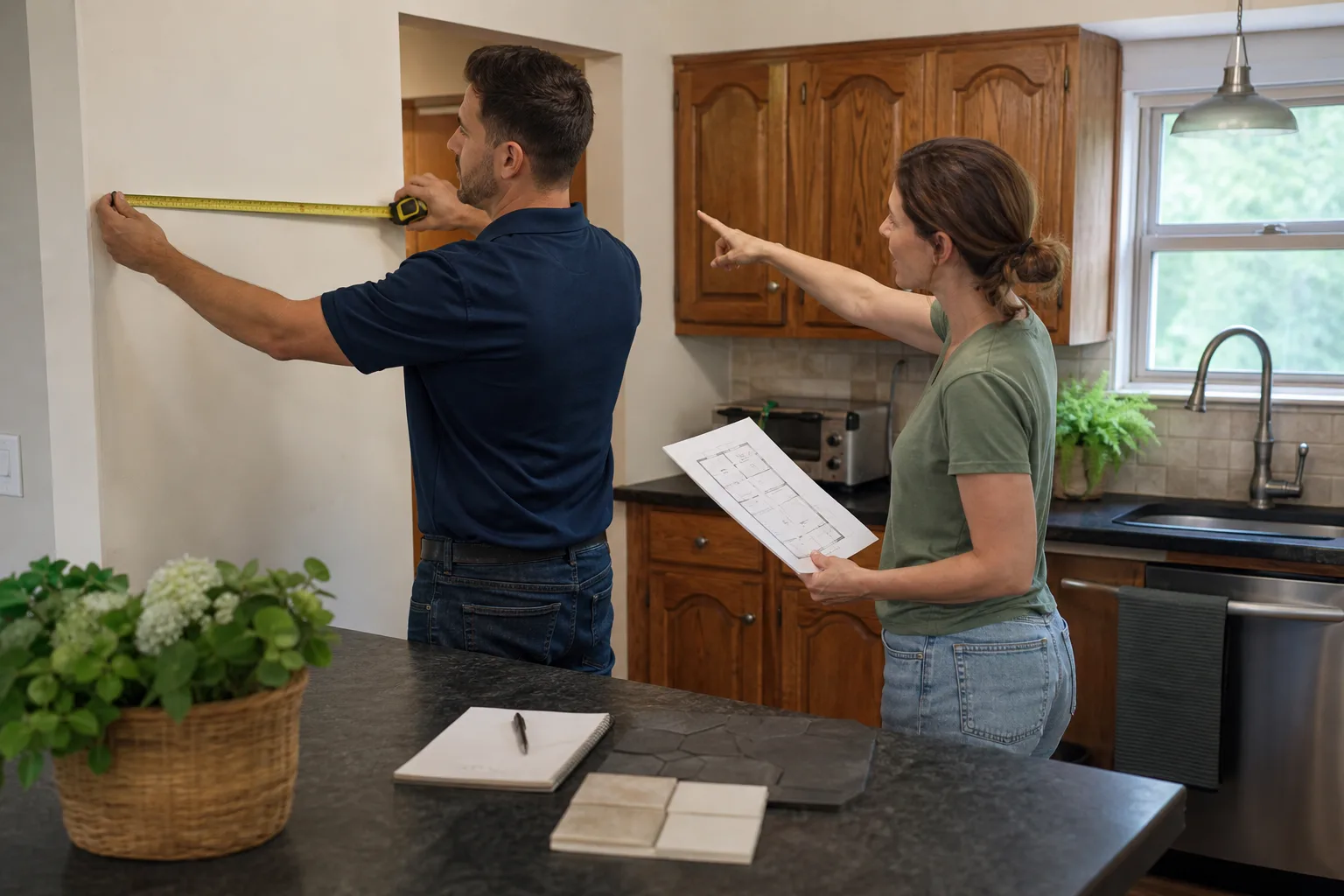
The first inspection happens roughly 30 days after the crew finishes. This is when you look for the small stuff before it becomes a service call. Walk the whole finished area with a flashlight and a notepad.
- Check every caulk joint for gaps. Look at the tub-to-tile transition, the backsplash-to-countertop, and the sink-to-wall. Any gap wider than a credit card’s edge gets re-caulked now.
- Look for hairline cracks at drywall seams and corners. Some are normal – framing dries and the joints flex. Note the location and measure the crack. If it grows over the next few months, that’s a different story.
- Test the doors and windows. Open and close them fully. New framing settles, and a door that stuck in month one may be fine by month six – or the start of a bigger issue.
- Check grout for pinholes, cracking, and voids. Run a fingernail along the grout lines in wet areas. If you find a void, seal it.
- Inspect exterior caulk at every penetration. Windows, doors, hose bibs, dryer vents. This is the seam that admits the most water in a Concord winter.
- Photograph everything. Date and label the photos. You’ll want them for comparison in six months and for any warranty claim.
Note: we don’t recommend homeowners crawl under a house or get on a roof to inspect framing or flashing. Those are the calls for a trained professional. If you see water staining on the interior at a ceiling or wall, that’s a call to the contractor who did the work – not a DIY job.
The 6-Month Check: Seasonal Movement
Six months in, the building has gone through a full seasonal half-cycle. In Concord that means a summer of dry heat followed by the early rainy season. This is where your log starts paying off – compare the cracks and joints you noted at 30 days against what you see now.
What to look for:
- Reopened caulk joints. If a joint you re-sealed at 30 days has already cracked again, the material was likely wrong for the joint, or the movement is more than caulk can bridge. Note it and call the contractor.
- Wider drywall cracks. Cosmetic cracks stay hairline. Anything a fingernail catches, or that’s wider than 1/16 inch, moves up the list.
- Paint failures. Blistering, bubbling, or peeling on interior painted drywall (near windows, especially) may point at a moisture issue.
- Floor squeaks and gaps. Hardwood floors can show small gaps between boards in the dry season. That’s normal movement in the material. Large gaps or visible cupping are not.
- Door and cabinet hardware. Knobs, pulls, and door hinges loosen with the first few months of use. Take a screwdriver to them – this is genuinely a homeowner task.
- Exterior trim and flashing. From the ground, check that caulk at window frames and corner boards hasn’t cracked. That’s the joint admitting rain.
If you’re comparing your Concord home’s exterior seams against what “normal” looks like, our General Contractor in Concord service page describes how we approach exterior inspections in this climate. The 6-month check is the highest-yield of the three, so don’t skip it.
The 12-Month Review Before Your Warranty Window Closes
Twelve months after project close, the building has been through every season, and the maintenance issues have largely settled into a pattern. This is also the point where most workmanship warranty windows are either closing or at their most valuable review date. Sit down with your log and go through the whole list one more time.
Schedule this review like an appointment. Set a calendar reminder, walk the project with a notepad, and document everything. Then make a call if you find something you’re not sure about. Under the 365-Day Done Right Promise, a Bradford project carries a written guarantee that if any part of the work fails within the year, we come back and correct it at no charge. That guarantee is worth more if you call us at month 11 with a documented issue than if you call us at month 14 after the window has closed. But we’d rather solve the small problem at month 11 than the expensive one at month 15 either way.
What the 12-month review covers:
- Full inspection of caulk, grout, and painted surfaces against your 30-day photos
- Function check on every door, window, drawer, and fixture
- Interior moisture check at tub surrounds, showers, and around sinks
- Exterior walk of the project perimeter, checking seals and finishes
- Notes on any “wait and see” items from the 6-month visit
Then set your recurring intervals for year two and beyond. From here, grout sealing (every 1 – 2 years), caulk inspection (annually), and paint touch-up (annually) become the permanent calendar.
Cosmetic Crack or Structural Problem? How to Tell
This is the question homeowners ask us most. We’ll give you the framework we use, but the honest answer is that if you’re unsure, a professional look costs less than a repair. The framework:
- Cosmetic (normal movement): Hairline cracks less than 1/16 inch wide, at drywall seams and corners, no offset between the two sides, no water staining, and closing slightly in the wet season.
- Cosmetic (normal shrinkage): Tiny gaps at baseboard-to-wall or crown-to-ceiling transitions in the first year. These are from wood drying and can be caulked.
- Suspect (call a professional): Any crack wider than 1/16 inch, a horizontal crack across a wall, a crack that follows the outline of a drywall panel joint (indicates a bad joint or substrate movement), visible step between the two sides of a crack, or any crack with water staining nearby.
- Structural (call now): Diagonal cracks from corners of doors or windows that run beyond a few feet, floors that feel spongy, or doors and windows that suddenly fit badly in multiple rooms.
Note here: if you ever see a crack that might involve the foundation, the framing, or the roof structure, don’t try to diagnose it yourself. Old masonry or stone foundations in older Concord neighborhoods (like the prewar blocks off Clayton Road) can show cracks that look cosmetic and aren’t. Get a licensed inspector in.
Warranty vs. Manufacturer Claim: What’s Actually Covered
Homeowners often assume a single “warranty” covers everything. It doesn’t. There are typically two separate warranty tracks on a finished remodel, and the difference matters when something fails.
The workmanship warranty covers the installation – the labor and how the materials were put together. If a joint separates because it wasn’t prepped correctly, a floor board lifts because it was installed over a wet substrate, or a cabinet pull falls off because the pilot hole was wrong, that’s a workmanship issue. Your remodeling contract’s guarantee covers it. Under The Garrison Standard, every Bradford project is written with a clear workmanship guarantee at the outset, and the 365-Day Done Right Promise means the crew comes back and makes it right if the work doesn’t hold for a full year.
The manufacturer warranty covers the material itself. A cabinet door that warps might be covered by the cabinet maker. A tile that delaminates may be covered by the tile manufacturer. A GAF shingle that blisters under manufacturer defect gets claimed through GAF. These claims run through the manufacturer, not the contractor, and they’re honored on the manufacturer’s timeline, not the contractor’s. Document the brand and model at installation – this is why we work from a documented roster of name-brand materials like KraftMaid and Wellborn cabinetry, Cambria surfaces, and James Hardie exterior products. When a claim comes up, brand matters.
If you’re unsure which track a failure falls into, call us. We’ll tell you straight which warranty applies, even if that means sending you to a manufacturer’s number.
The Maintenance Log That Protects Your Investment
The single thing that separates homeowners who get their warranty honored from those who don’t is a maintenance log. It doesn’t need to be fancy – a notebook, a spreadsheet, or a folder in your phone is fine. Here’s what to record:
- Date of every inspection. Note it whether or not you found anything. “June 15, 2026 – inspected, no issues” is a record.
- Photographs with dates. Same angle every time so you can compare. Photo the specific joints and seams you’ll be watching.
- Product names and model numbers. Every cabinet, fixture, surface, and exterior product. Manufacturer claims need these.
- Every maintenance action taken. Re-caulking, resealing, paint touch-ups. Date and product used.
- Every contact with the contractor. Date you called, what was reported, what was done.
That log matters in two situations: filing a warranty claim, and selling the house. A documented maintenance log is a genuine selling asset – a buyer trusts a home with a paper trail. If you sell a Concord home with a remodeled kitchen or bath, the log is something to hand over, and our Kitchen Remodeling in Concord and Bathroom Remodeling in Concord pages both note the close-out documents we provide at project completion. Those documents should go straight into the log.
Common Mistakes to Avoid
- Waiting for visible damage before calling. A slow caulk failure behind a tub surround shows up as a ceiling stain roughly two years after it starts. By then the repair is serious.
- Re-caulking over a wet joint. New caulk won’t bond to wet substrate. If the joint has been leaking, it needs to dry out and sometimes be opened up before re-sealing.
- Using the wrong caulk for the joint. Kitchen and bath silicone is not the same as paintable acrylic. Silicone at a painted joint traps moisture; acrylic at a wet joint fails.
- Assuming the manufacturer warranty covers installation. It doesn’t. A cabinet door that warps from being improperly hung is a workmanship claim, not a manufacturer claim.
- Skipping the 6-month check. It’s the highest-yield inspection of the three. Moving it to year two lets seasonal movement do its damage unobserved.
- Not photographing at close. Without the 30-day photos, the 12-month comparison has nothing to compare against.
- Cleaning grout with the wrong products. Acidic bathroom cleaners etch cementitious grout over time. Mild soap and water is the right answer, whatever the bottle says.
- Putting heavy furniture on new hardwood too soon. Let the floor acclimate a few weeks before heavy loads sit on it. Move furniture slowly and lift rather than drag.
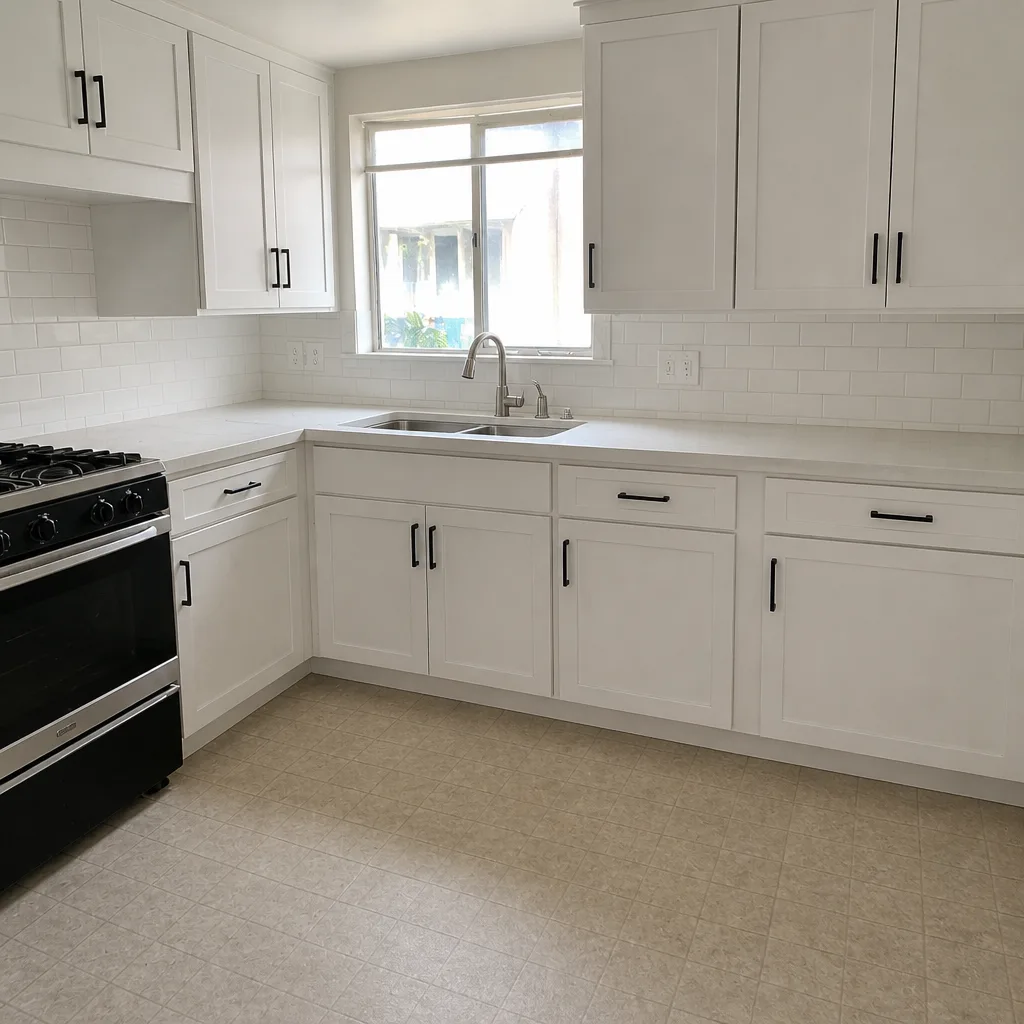
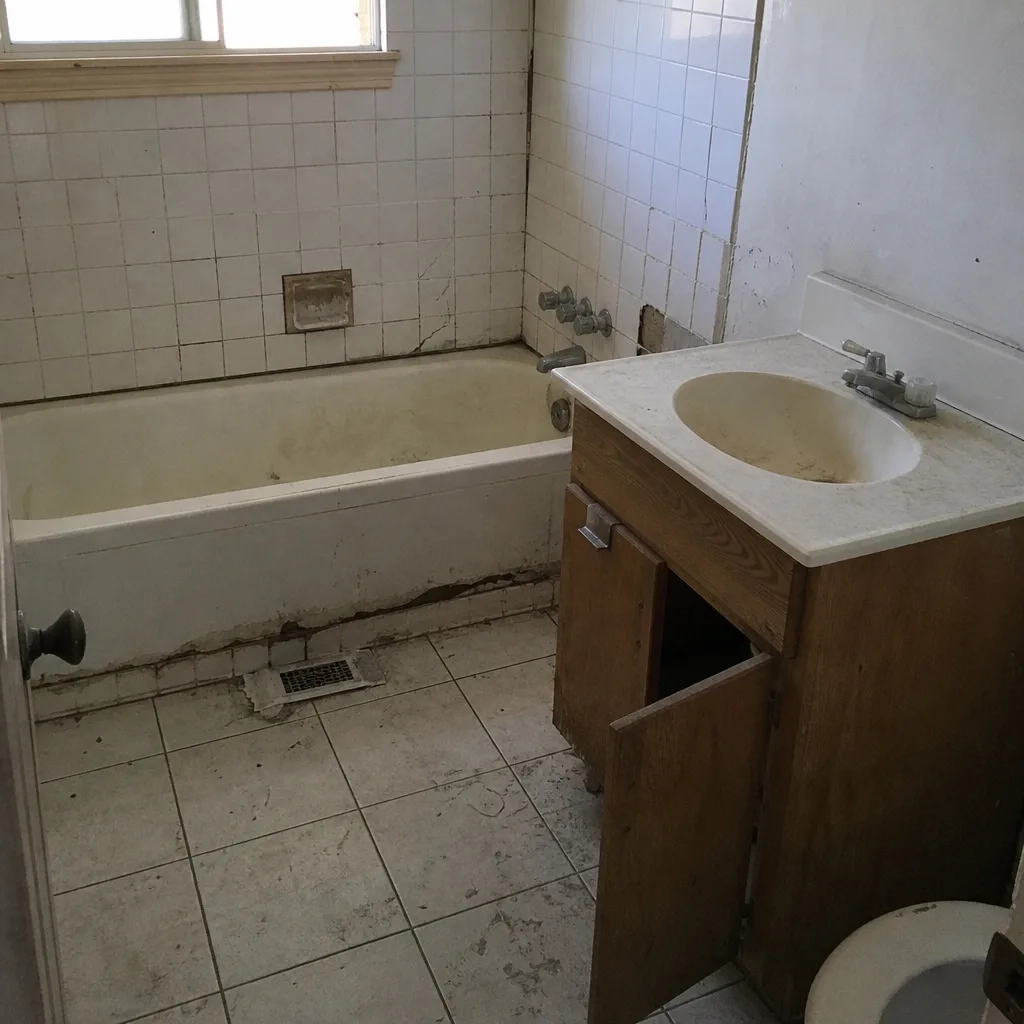
See the difference
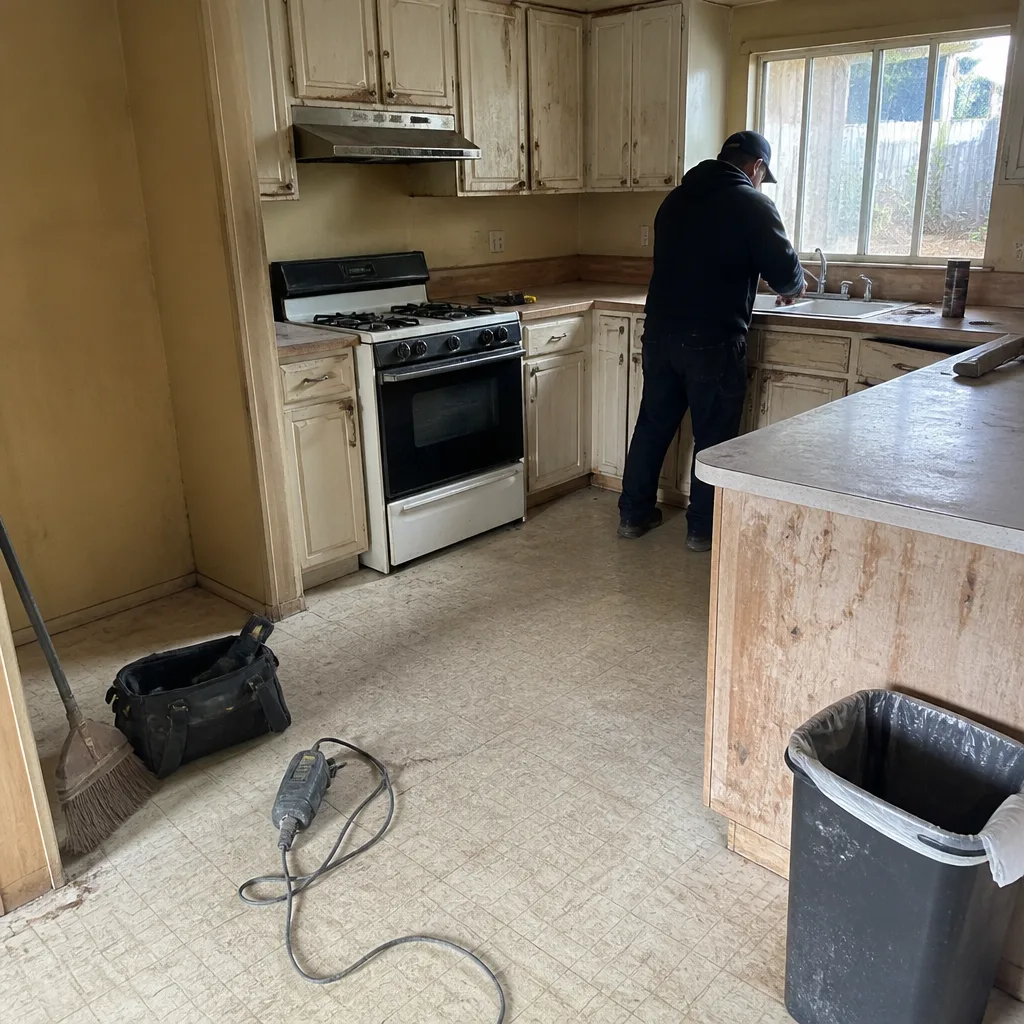 Before
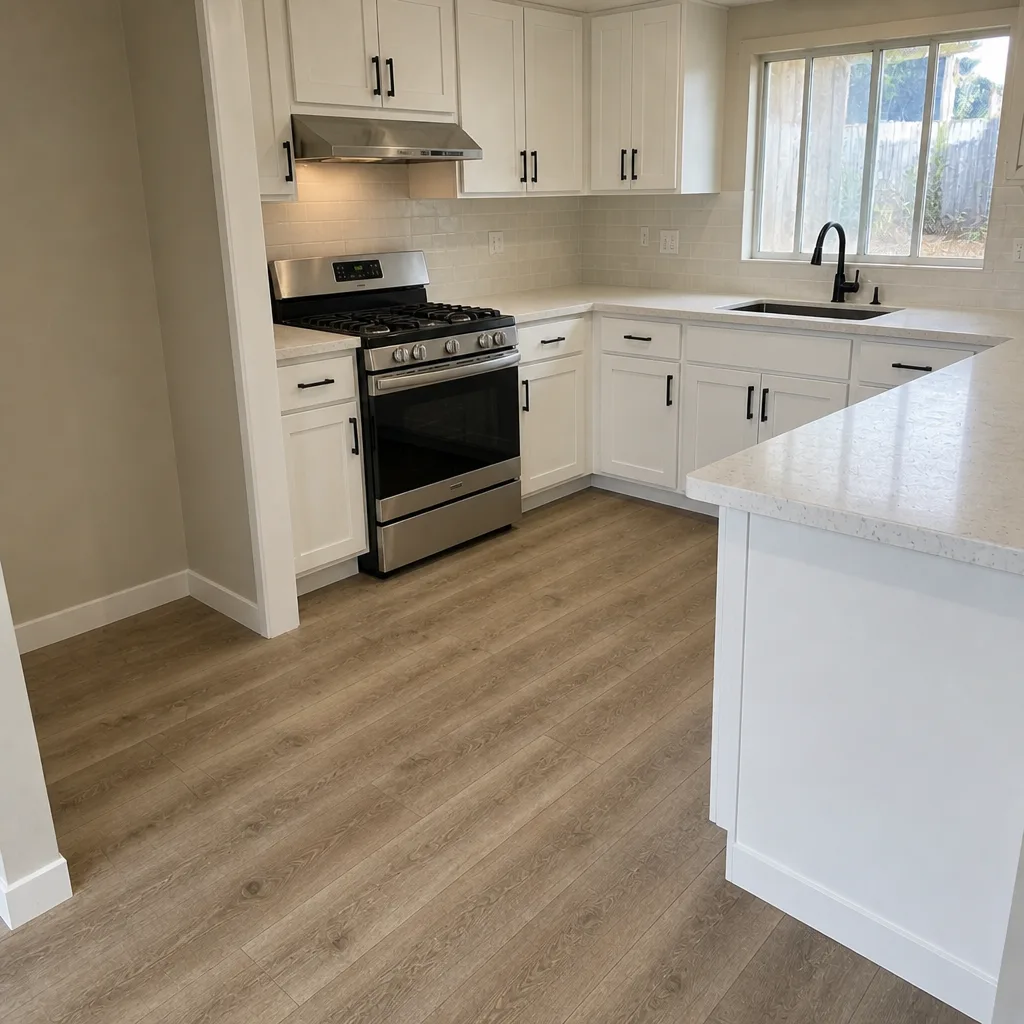 After
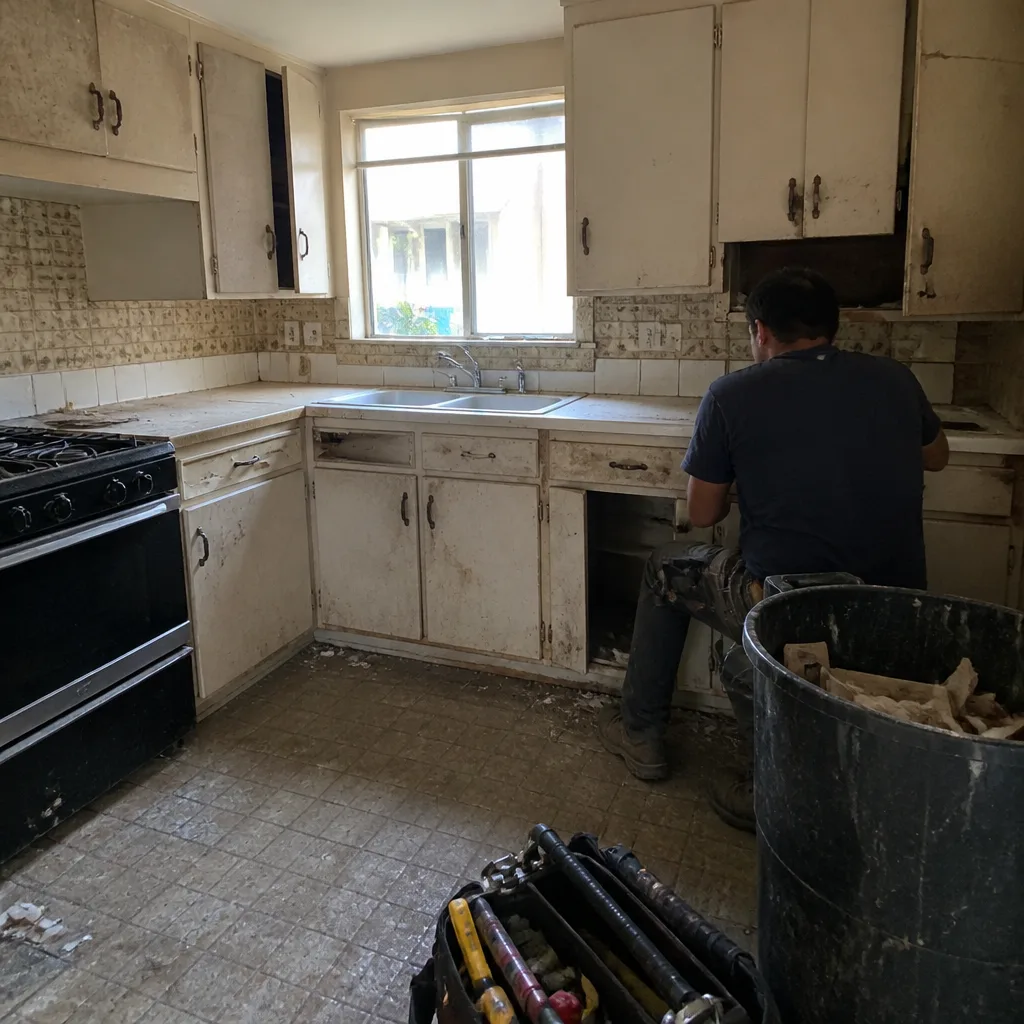 Before
 After
 Before
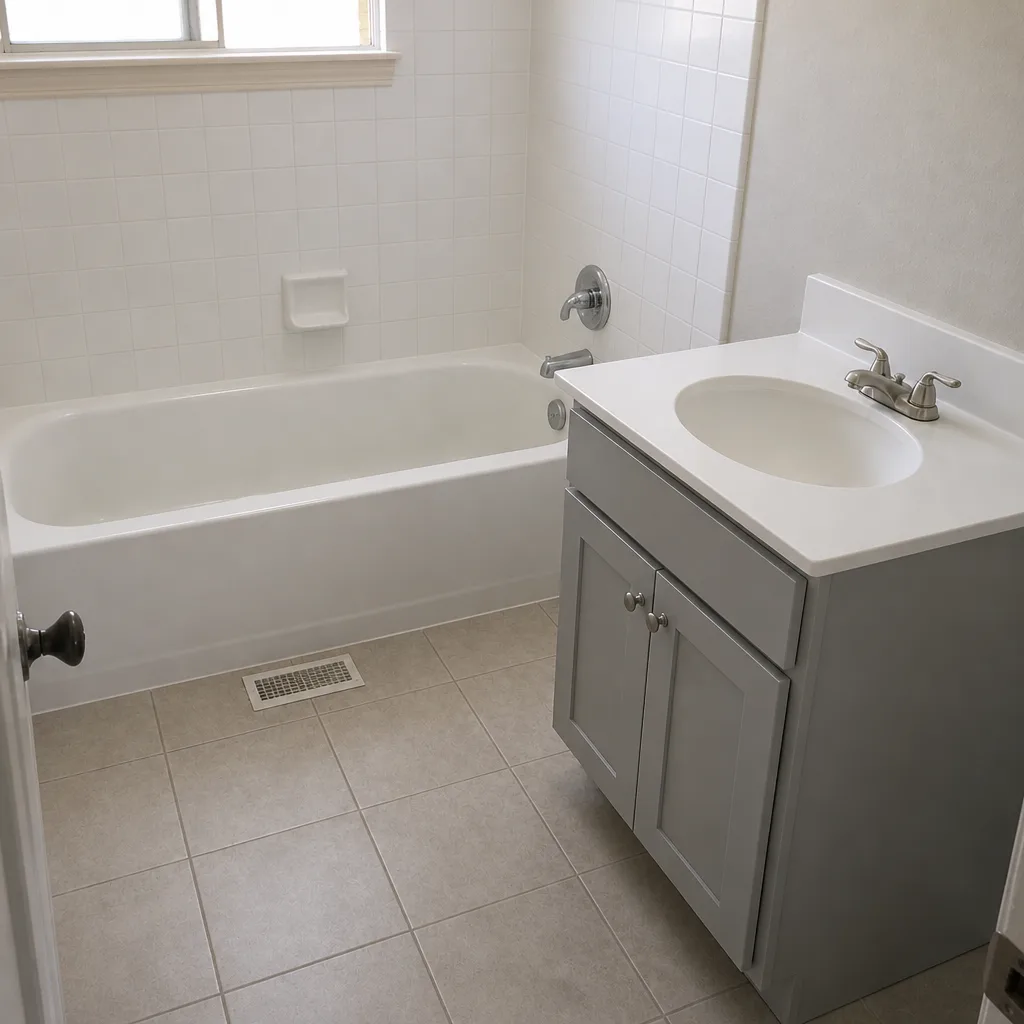 After
When to Call a Professional
Call us, or any licensed contractor, when you hit any of these: a crack that’s wider than 1/16 inch or has a step in it, water staining on a ceiling or wall below an upstairs bathroom, an exterior caulk joint that’s failed and reopened after re-sealing, or any structural question you can’t answer confidently from the guide above. We’d also want the call if a door or window that fit cleanly at close suddenly sticks in multiple rooms – that pattern deserves a professional look. The other reason to call: if you’re not sure which warranty applies to a failure. Bradford Remodeling Co Concord offers free estimates in Concord – call (866) 476-6447 and we’ll walk through what’s covered and what isn’t before you spend a dollar on repair.
Frequently Asked Questions

Inspect the caulk and grout every six months, and do a full review once a year. Bathrooms are the highest-priority room because a failed joint admits water behind the wall where you can’t see it. Concord’s dry summers and wet winters make the seasonal caulk inspection especially worthwhile.
A workmanship warranty covers installation – how the materials were put together. A manufacturer warranty covers the material itself. If a joint fails because it wasn’t prepped right, that’s workmanship. If a cabinet door warps from a defect in the wood, that’s a manufacturer claim. Call us if you’re unsure which applies; we’ll tell you straight.
No. The 365-Day Done Right Promise guarantees the work itself – if it fails within the year because of how it was installed, we come back and fix it at no charge. Maintenance items like re-caulking or resealing grout are homeowner responsibilities. That’s why the log matters: it shows whether a failure was a workmanship issue or a neglected joint. Call (866) 476-6447 if you want to talk through a specific case.
Hairline cracks under 1/16 inch wide, at drywall seams, with no step between the two sides, are cosmetic. Anything wider, horizontal across a wall, or with visible offset is worth a professional look. If you’re unsure, don’t diagnose it yourself – call us and we’ll send a technician to assess it.
Before. Caulk needs a dry substrate to bond, and late-summer to early-fall is the right window in Concord – the framing has dried through the summer, and you’re sealing ahead of the first rains. Caulking into a wet joint in November is a waste of material. Call us for a free estimate if you’d rather have the joint assessed by a professional first.
The initial estimate is free. After the 365-Day Done Right Promise window has closed, any maintenance visit or repair is quoted in writing before work starts – no numbers that move at the door. That’s the same commitment we make on every project in Concord, regardless of size. Call (866) 476-6447 to schedule.
The Bottom Line
A finished remodel doesn’t end your relationship with the work – it starts a maintenance window. The three checkpoints (30 days, 6 months, 12 months) catch settling, shrinkage, and seasonal movement while they’re small. The material lifecycles (grout every 1 – 2 years, caulk every 3 – 5, hardwood every 7 – 10) tell you what to schedule between them. Document everything, understand which warranty covers what, and call a professional when a crack or a gap looks structural rather than cosmetic. That discipline is what turns a one-year written guarantee into a ten-year investment. If you’re at a checkpoint now and want a professional assessment, call (866) 476-6447 for a free estimate from Bradford Remodeling Co Concord.
Written by the team at Bradford Remodeling Co Concord.