Last updated November 18, 2026
Free written scope consultation - allowances, timeline, and change-order rules on paper before a single trade is scheduled
General Contractor Warning Signs Every Homeowner Should Know
A contractor who gives you a verbal estimate faster than you can walk the job site with him isn’t confident. He’s guessing, and you’ll pay for that guess in change orders six weeks later. The red flags that actually predict a bad remodel outcome rarely show up as a confrontation at final inspection. They show up in week one: a vague scope paragraph, a deposit that eats half the job, a phone that goes to voicemail during the bid but rings fast when there’s a check involved. This guide is about those early diagnostic signs, written from Concord, where we’ve watched enough projects go sideways to recognize the pattern before the drywall goes up.
Quick Answer
The most reliable warning signs are a verbal estimate with no written scope, a payment schedule front-loaded toward a large deposit, no license number on the paperwork, and a contractor who won’t put specifics in writing during the bid phase. Any one of these signals future dispute risk. Two or more together mean walk away, no matter how good the price looks.
Styles & brands we work with
- Kitchen remodeling
- Bathroom remodeling
- Home additions & ADU
- Roofing
- Windows & doors
- Driveway & pavers
- Fence
Table of Contents
- Contract Red Flags That Predict a Dispute
- Communication Patterns in the First Week
- How to Verify a California Contractor License
- Cheap vs. Underpriced: Why the Second One Is More Dangerous
- What “We’ll Figure It Out As We Go” Really Means
- Reading the Payment Schedule
- Concord-Specific Signals to Watch
Contract Red Flags That Predict a Dispute
The contract is where a bad remodel is already decided, long before anyone swings a hammer. We’ve seen homeowners sign three-page agreements with the word “miscellaneous” carrying $14,000 of undefined work. That single vague line is the seed of every change order that follows. When the scope language can’t be priced by a third party, it can’t be enforced by either of you.
Here’s what a dispute-prone contract usually contains:
- Vague scope language. “Remodel kitchen per plans” with no line items for demolition, rough-in, substrate, cabinetry specs, or finish schedules. If you can’t tell from the contract what brand and model of cabinet is being installed, neither can a mediator.
- A front-loaded payment schedule. A deposit of 30 to 50 percent before demolition is a financing arrangement, not a schedule. California limits home improvement deposits to 10 percent of the contract price or $1,000, whichever is less, plus a schedule that tracks actual progress.
- No license number on the document. A legitimate bid carries the CSLB license number in the header. Its absence is not an oversight.
- No written change order process. If the contract doesn’t say how changes get priced, approved, and signed, every change becomes a verbal negotiation under pressure while your kitchen sits gutted.
- No written warranty terms. “We stand behind our work” is not a guarantee. The number of months and what’s covered should be in the document.
For a look at how a properly scoped general contracting agreement reads, the difference is obvious the moment you compare one side by side: general contractor services in Concord that follow The Garrison Standard put every line in writing before a single tool comes out.
Communication Patterns in the First Week
How a contractor communicates during the bid is how he’ll communicate when a beam turns out to be rotten. This is the part most homeowners miss because they’re focused on the number. The number is the last thing to judge. The pattern comes first.
Watch for these in the first week:
- Slow or inconsistent response during the bid phase. If it takes four days to answer a question about your own kitchen while he’s trying to win the job, imagine the response time once he’s already been paid.
- Reluctance to put specifics in writing. Ask for the estimate by email with brand names and model numbers. A contractor who says “I’ll just tell you at the walkthrough” is avoiding a paper trail.
- Pressure to sign quickly. Legitimate contractors don’t run countdowns. A deadline that exists only to rush your decision is a sales tactic, not a scheduling reality.
- No project manager named. You should know before signing who runs your job day to day and how to reach that person after 5 p.m.
- Evasive answers about permits. “We don’t need a permit for that” is sometimes true and often expensive to be wrong about. Ask which permits apply and who pulls them.
In our experience in Concord, the contractors who disappear mid-project are almost always the ones who were hard to pin down before the contract. The pattern doesn’t change when money moves. It just gets more expensive.
How to Verify a California Contractor License
Every contractor doing a job over $500 in California must hold a license from the Contractors State License Board. Checking takes two minutes and catches problems that would take two years to untangle.
Here’s the process:
- Go to the CSLB website and use the license lookup tool.
- Enter the license number from the bid, not just the business name.
- Confirm the license status is “Active” and the classification matches your work. A B-General Building license covers most remodel work; specialty trades need their own classification.
- Check the expiration date. An expired license means no bond protection.
- Look at the “Complaints” and “Disciplinary Actions” tabs. A single complaint may be a difficult client; a pattern of arbitration awards or suspensions tells you something else.
- Confirm the license is issued to the person or entity on your contract, not a similarly named company.
What the CSLB lookup does not tell you: whether the contractor will show up on Monday, whether he runs a clean site, whether his crews are background-checked, or whether his work holds up in year two. It confirms eligibility, not discipline. Those other questions you answer through the contract, the references, and the written guarantees. A license is the floor, not the ceiling.
Cheap vs. Underpriced: Why the Second One Is More Dangerous
There’s a difference between a contractor who is cheap and one who has underpriced your job, and it’s the second one that ends in tears. A genuinely cheap bid usually means a smaller operation, less overhead, maybe a longer timeline. An underpriced bid means the number can’t cover the actual scope, and the gap gets filled somewhere: change orders, cut corners, or an abandoned job when the money runs out.
Here’s the tell. Compare the bid against the line items:
- Does the price include cabinetry allowance? At what specification? Cambria and Caesarstone surfaces don’t come out of a $2,000 countertop allowance.
- Is there a line for permits and inspection fees, or is that “TBD”?
- Are Kohler fixtures named by model, or is it “plumbing fixtures” with no brand?
- Is demolition and disposal in the bid, or does it appear on the first invoice?
If the number looks 20 percent below the other bids and the scope is thin, you’re not saving 20 percent. You’re financing a shortfall. In Concord’s market, where older homes from the 1950s and 60s often hide knob-and-tube wiring or galvanized supply lines behind the walls, an underpriced bid is a bid that assumes nothing goes wrong. Something always goes wrong.
What “We’ll Figure It Out As We Go” Really Means
When a contractor says this, what he usually means is that he didn’t do the takeoff. The phrase sounds flexible. It reads as confidence. In practice it’s an admission that the scope hasn’t been priced, and in a remodel contract an unpriced scope is an open invoice.
Here’s why it always turns into change orders. A remodel has a fixed budget and a variable reality. If the contract defines the reality narrowly (“demo, install, finish”) and the actual work runs wider (subfloor repair, reframing around an old window, relocating a drain), every widening becomes a written change at premium pricing. The homeowner has no leverage because the wall is already open and the crew is already on the clock.
The disciplined alternative isn’t a bigger contract. It’s a specific one. A by-the-book contractor prices the known work, names an allowance for the unknown work, and defines how allowances get settled so neither side is negotiating from a bad position. That’s the difference between a job that closes out and a job that drags. If you want to see it applied to a project that has genuine unknowns, a kitchen remodel in Concord is the place it matters most, because kitchens hide the most surprises behind the cabinets.
Reading the Payment Schedule
The payment schedule is the single most predictive document in the contract. It tells you who is financing whom. A schedule that front-loads the deposit means the contractor is using your money to fund your own job, which means a slow month elsewhere can stall your project entirely.
What a healthy schedule looks like:
- A deposit that stays within California’s statutory limit and is tied to the start of actual work.
- Progress payments tied to completed milestones, not calendar dates. “Framing complete” is a milestone; “week three” is not.
- A meaningful final payment, held until punch list and final inspection, not a token $500.
- No payment for materials that haven’t been delivered.
A schedule that asks for 40 percent up front, 40 percent at rough-in, and 20 percent at substantial completion is effectively asking you to fund the job and hope. Ask about it directly. A contractor who runs a disciplined operation will explain the reasoning without flinching; one who doesn’t will get vague. The same discipline shows up in a bathroom remodel in Concord, where waterproofing and rough-in are invisible after the tile goes on, so the written milestone matters more than the weekly check-in.
Concord-Specific Signals to Watch
Concord’s housing stock and climate create specific tell-tale signs that don’t show up the same way elsewhere. The city runs hot in summer, with inland heat that pushes past 100 degrees for stretches, and that heat changes how exterior work and roof assemblies behave. A contractor who bids a Concord roof replacement without accounting for proper attic ventilation and GAF or James Hardie material specs is bidding a job that will fail early, guarantee or not.
Winter brings its own issue. Concord sits in a rain shadow compared to the coast, but the wet season still delivers focused storms, and older homes in neighborhoods like Todos Santos and the areas around Willow Pass often have original drainage that can’t handle a heavy week. We regularly see contractors bid a whole-home remodel without checking the grading around the foundation, then discover water intrusion when the first wall comes down. A disciplined bid includes a site check for that before the price is signed.
Two other Concord-specific items: first, permits. The city has its own building department and inspection sequence, and any contractor who says “we don’t pull permits for that” on a structural change is either unfamiliar with the local process or hoping you are. Second, materials. A contractor who can’t name the cabinet brand or the surface manufacturer in the bid is leaving quality to the day the order gets placed, and in Concord’s market that usually means the substitution happens after you’ve signed. Named brands like Cambria and Silestone in the bid are a sign the specification is traceable.
Common Mistakes to Avoid
- Signing before the scope fits on one page. If the scope of work can’t be read and priced in a single sitting, it’s not a scope. It’s a summary.
- Treating the lowest bid as the market rate. In Concord, the lowest bid is usually the one with the most undefined allowances, and allowances are where budgets die.
- Skipping the CSLB lookup because the contractor “seemed honest.” Two minutes on the CSLB site catches license lapses and disciplinary history that a handshake can’t.
- Accepting “we’ll figure it out as we go” on a structural wall. In older Concord homes, that phrase precedes a reframing change order nine times out of ten.
- Not asking who pulls the permit. If the homeowner pulls it, the homeowner owns the liability for every inspection failure.
- Paying for materials not yet delivered. A materials deposit with no delivery receipt is a loan, not a payment.
- Assuming a verbal warranty has teeth. The 365-Day Done Right Promise is written for a reason: an unwritten guarantee covers nothing.
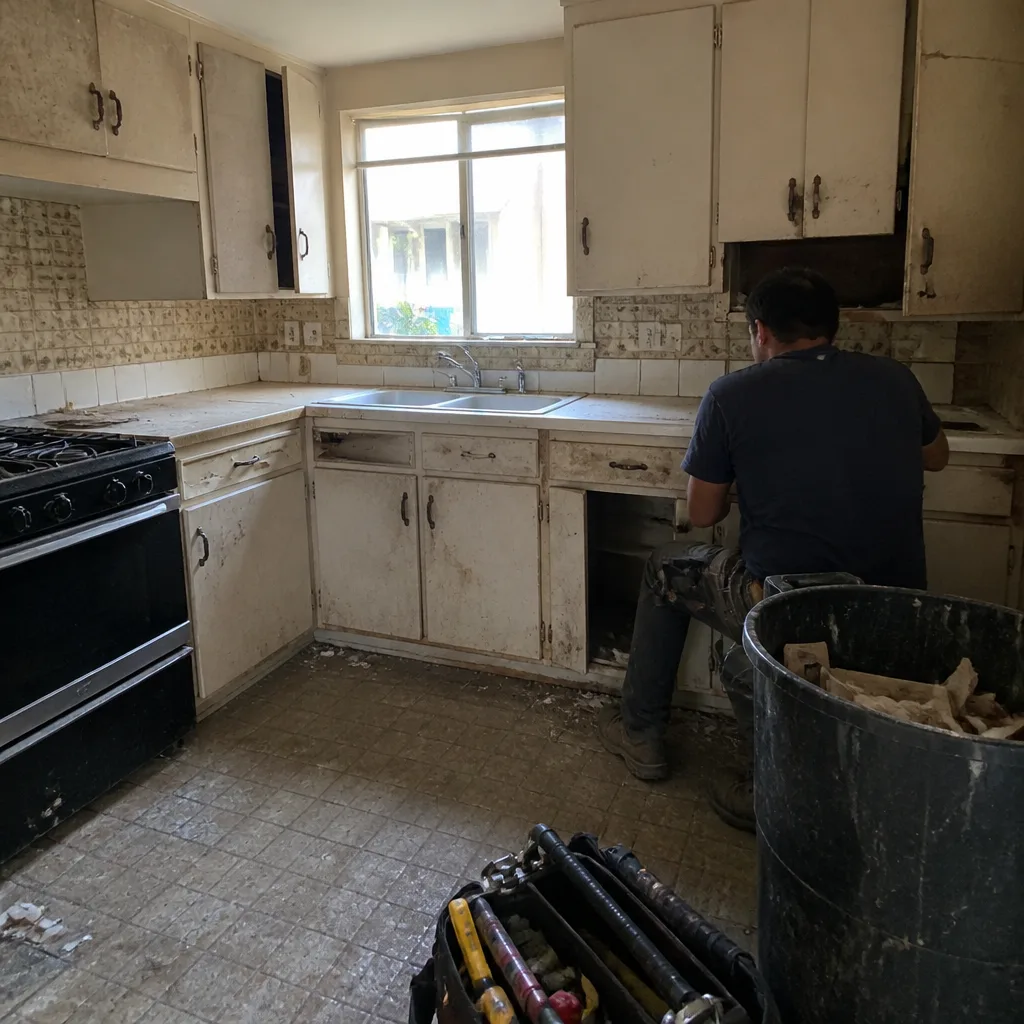
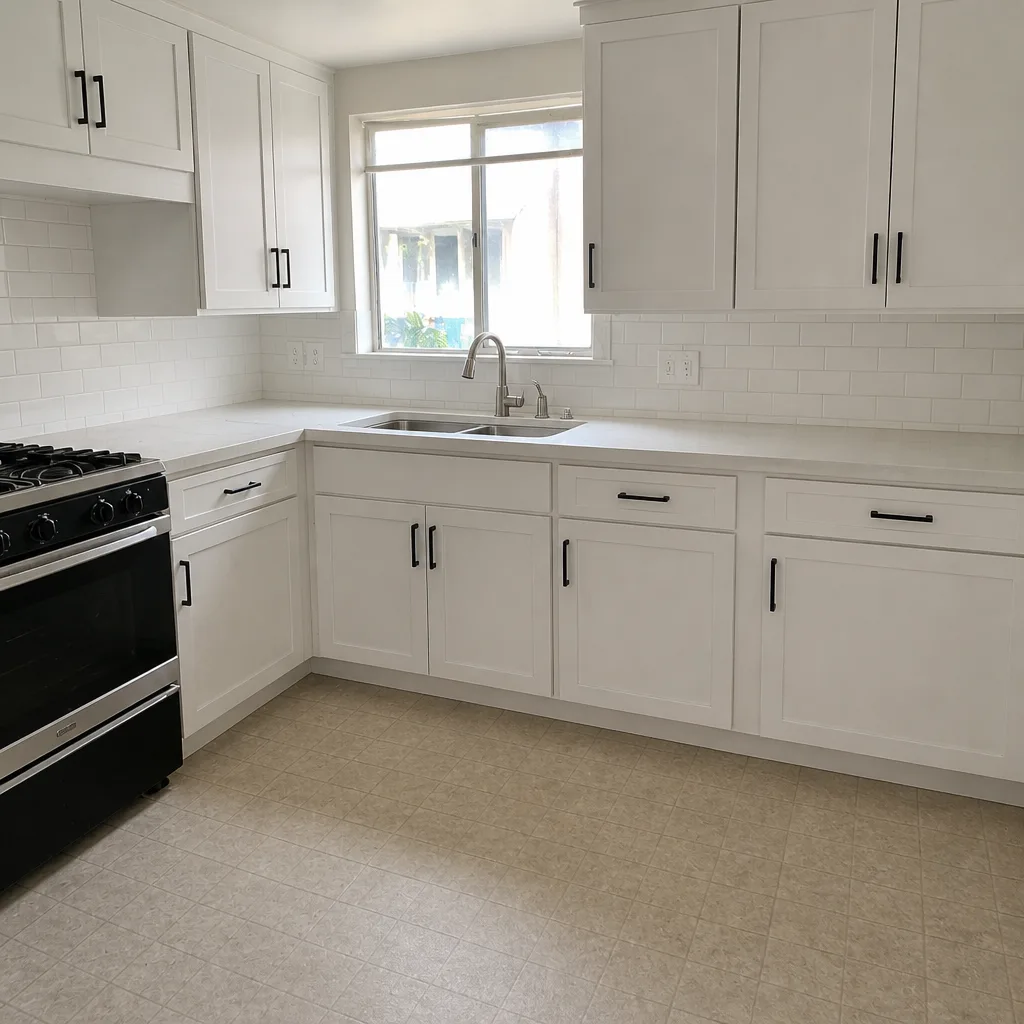
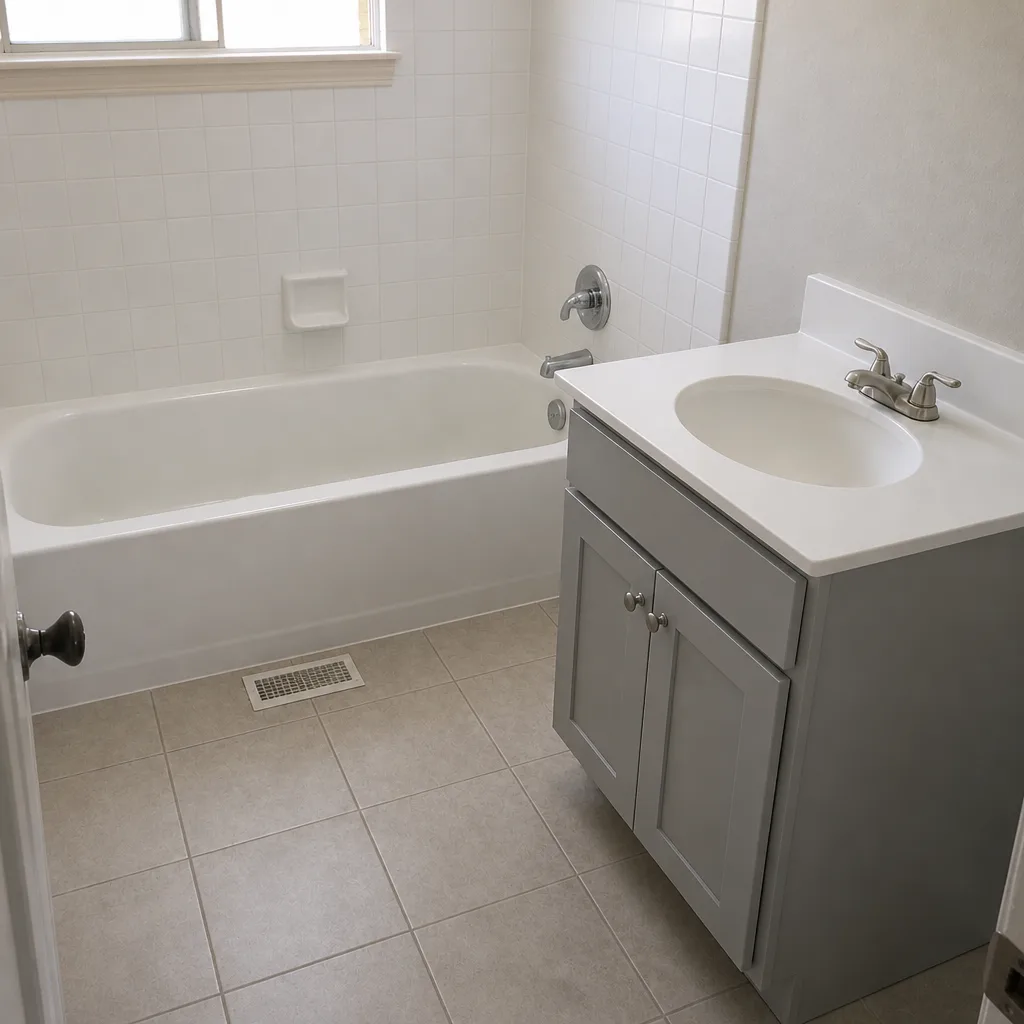
See the difference
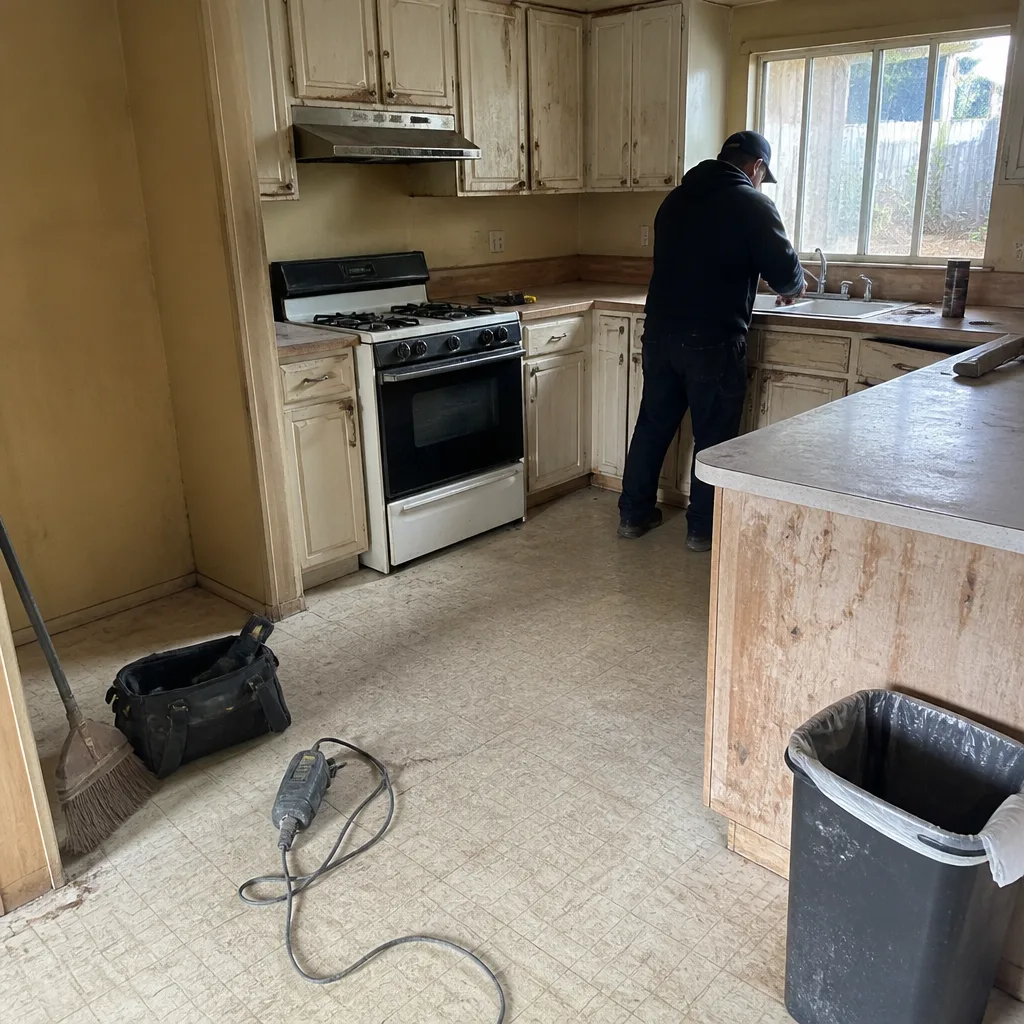 Before
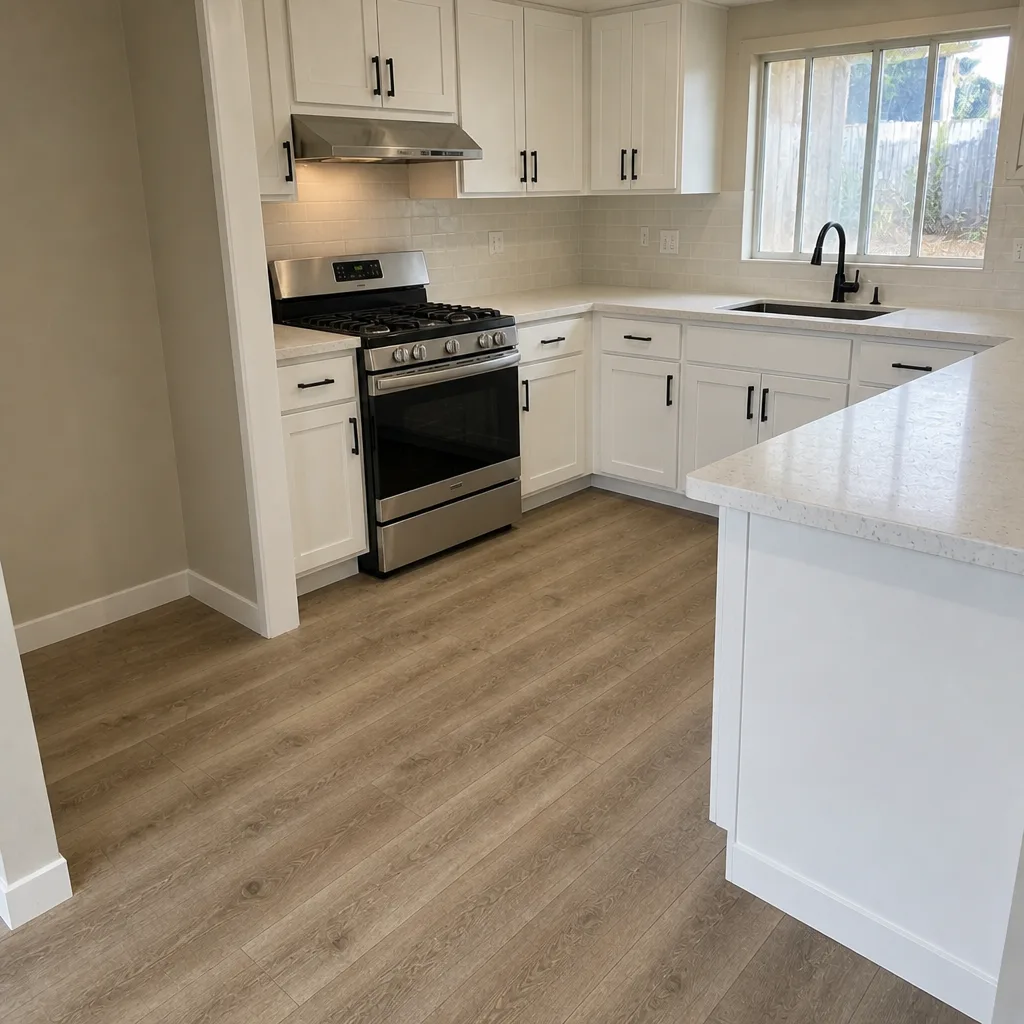 After
 Before
 After
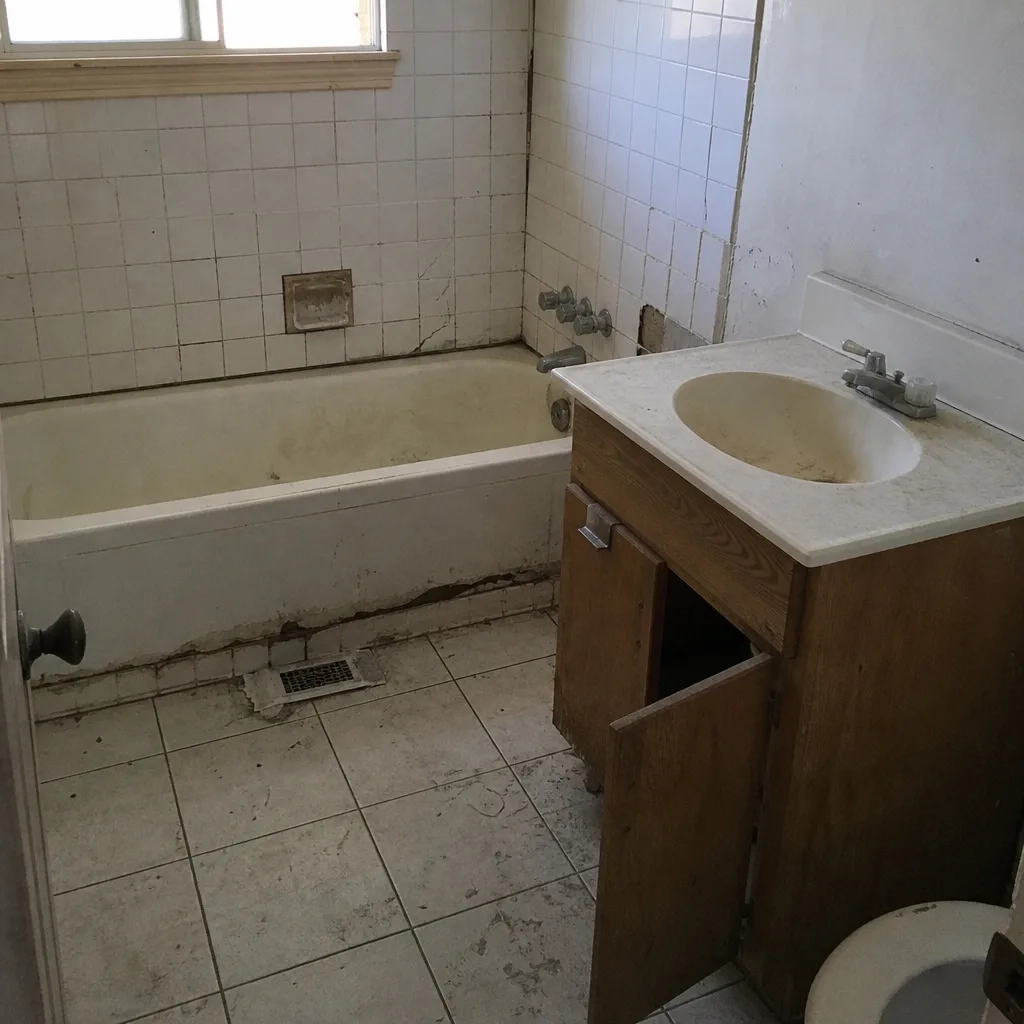 Before
 After
When to Call a Professional
Call a professional before you sign anything, not after. Specific situations that deserve a second set of eyes: any bid under $500 that involves plumbing or electrical (both require permits in Concord), any whole-home remodel where the contractor hasn’t walked the property with you, any job where the scope mentions “miscellaneous” or “allowance” without a number, and any project where the contractor’s license status is anything but active and the classification doesn’t match the work. If you’re already mid-project and the signs are showing, the earlier you bring in a second opinion, the cheaper the correction.
Bradford Remodeling Co Concord offers free estimates in Concord and the surrounding area. Every estimate is written, line-itemed, and priced before any work starts. Call (866) 476-6447 to schedule yours.
Frequently Asked Questions
The biggest red flag is a fast verbal estimate with no written scope. A contractor who quotes a number before walking the job in detail hasn’t done the takeoff, and the missing work becomes change orders later. Ask for the price in writing, by line, and watch the response.
Use the Contractors State License Board lookup tool with the license number from the bid. Confirm the status is active, the classification matches your work, and check the complaints and disciplinary tabs. The lookup confirms eligibility, not workmanship; that’s what references and written guarantees are for. Call (866) 476-6447 if you want a written comparison estimate before you decide.
No. California limits home improvement deposits to 10 percent of the contract price or $1,000, whichever is less, and requires the rest of the schedule to track progress. A contractor asking for 30 to 50 percent up front is asking you to finance the job. Ask for a milestone-based schedule instead.
It usually means the scope hasn’t been priced and every discovery will become a change order. In older Concord homes, that phrase is a prediction of cost overruns, not flexibility. Ask for the unknown to be handled as a named allowance with a written settlement process.
Kitchen remodel costs in Concord range widely depending on cabinet grade, surface material, and whether plumbing or electrical moves. A written line-item estimate is the only number worth planning against. Call (866) 476-6447 for a free written estimate with brand names and model specs included.
Yes, for any structural, electrical, plumbing, or mechanical work. Concord has its own building department and inspection sequence, and a contractor unfamiliar with it is a red flag. Confirm in writing which permits will be pulled and who pulls them before the contract is signed.
The Bottom Line
The contractors who fail your project telegraph it in the first week, not the sixth. They bid fast and verbal, resist putting scope and materials in writing, front-load the deposit, and sidestep the license lookup. None of those are deal-breakers alone, but two or three together are the pattern that ends in change orders and an unfinished kitchen. The disciplined alternative is boring and specific: written line items, brand names, milestone payments, permits named, and a written guarantee with a defined term. That’s the standard we work from in Concord, and it’s what The Garrison Standard means in practice. Bradford Remodeling Co Concord home has more on how the process runs.
If you’re ready for a written price before any work starts, call (866) 476-6447 for a free estimate.
Written by the team at Bradford Remodeling Co Concord.