Last updated November 18, 2026







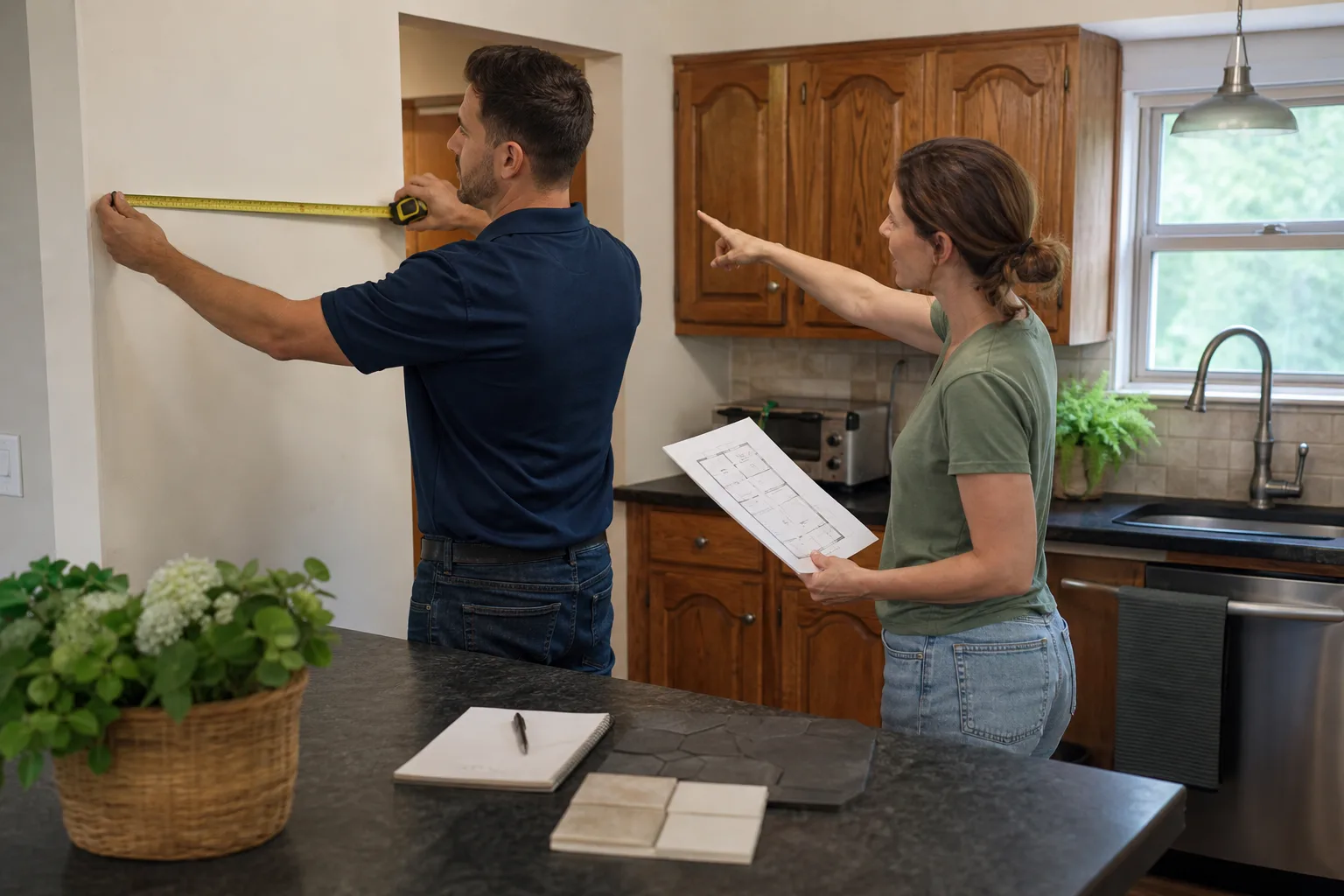
Free written scope consultation - allowances, timeline, and change-order rules on paper before a single trade is scheduled
Home Remodeling Maintenance Schedule: What to Do and When
Most warranty fine print contains a clause that voids coverage if the homeowner skips routine maintenance. Almost no contractor explains which tasks trigger that clause. That’s the gap this guide fills. In our experience, a failed caulk line or a clogged gutter is rarely just a nuisance – it’s often the exact piece of evidence a manufacturer or a workmanship guarantor points to when a claim gets denied. What follows is a schedule built around the trade work behind each task, so you know what you’re protecting and why. Concord homeowners in particular face a climate that punishes skipped upkeep, and we’ll get to that.
Quick Answer
A home remodeling maintenance schedule is a seasonal checklist that maps each upkeep task to the specific trade work it protects – caulk joints to tile and siding, grout sealer to bathroom installations, flashing and gutters to roof and window work. In Concord, the split runs roughly like this: inspect and re-caulk exterior joints every spring, clear gutters and check flashing every fall before the rains, and reseal grout and stone once a year. Doing these on time keeps your manufacturer warranties and your contractor’s workmanship guarantee valid.
Styles & brands we work with
- Kitchen remodeling
- Bathroom remodeling
- Home additions & ADU
- Roofing
- Windows & doors
- Driveway & pavers
- Fence
Table of Contents
- Why Your Warranty Depends on This Schedule
- Manufacturer vs. Workmanship Requirements: Two Different Lists
- The Seasonal Cadence for Concord’s Climate
- Mapping Each Task to the Trade Work It Protects
- What You Can Do Yourself vs. What Needs a Licensed Trade
- The One-Page Checklist to Keep With Your Project Paperwork
- Common Mistakes to Avoid
- Frequently Asked Questions
Why Your Warranty Depends on This Schedule
A workmanship warranty is a promise that the installation itself will hold. It is not a promise that the installation will hold regardless of what happens afterward. Those are different things, and the gap between them is where most denied claims live.
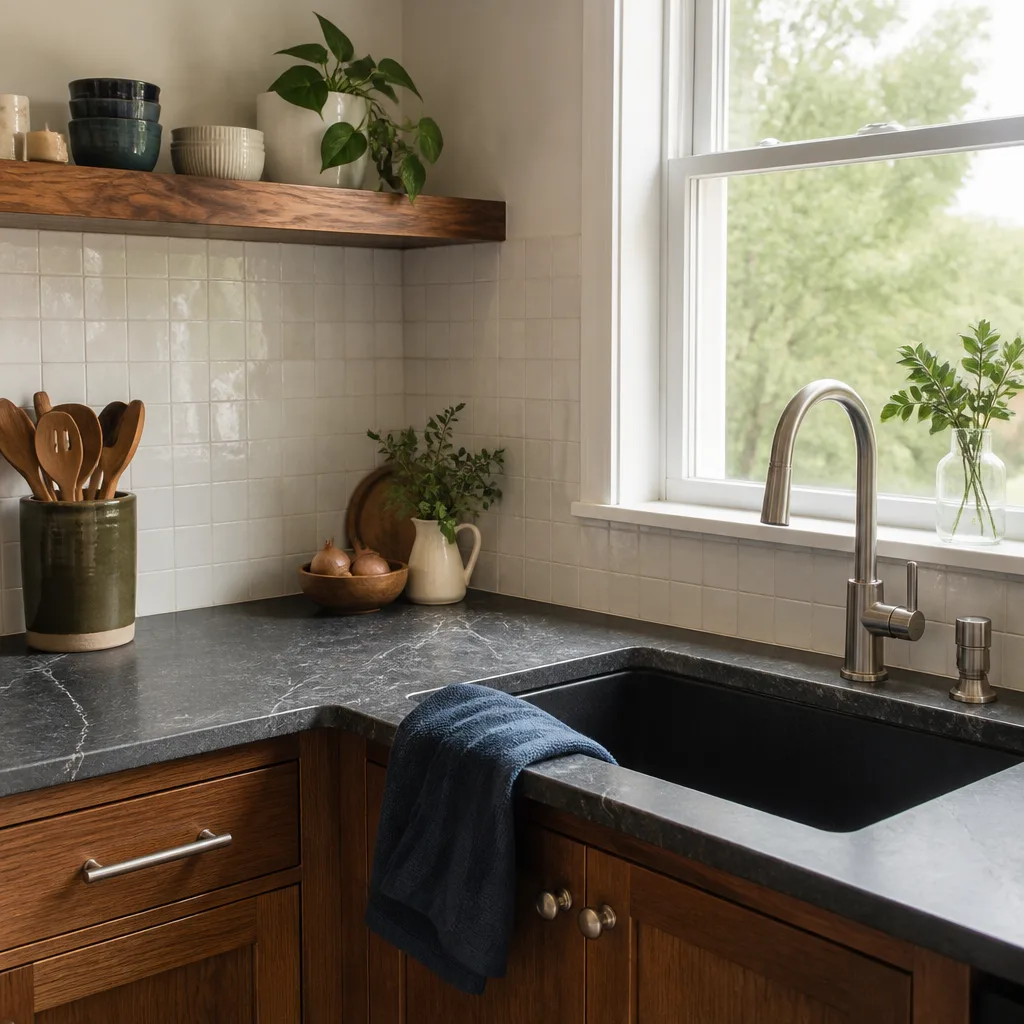
Take a kitchen backsplash. The installer’s job is to set tile on a properly prepared substrate, grout it correctly, and caulk the transition where the tile meets the counter. That work can be flawless. But if the caulk at that counter joint is left to crack and pull away over two summers of dry Concord heat, water finds the gap, and the failure that follows is a maintenance failure – not a workmanship failure. The guarantee stays valid only as long as the homeowner holds up their end: keeping joints sealed, keeping surfaces clean, reporting problems before they spread.
This is what most people miss. A warranty isn’t a set-and-forget insurance policy. It’s an agreement with conditions, and the conditions are the maintenance tasks in this guide. On every general contractor in Concord project we square away, we hand over the written guarantee and the scope of work in the same packet, because the two only make sense together. You can’t protect work you can’t identify, and you can’t keep a guarantee valid if you don’t know what it asks of you.
The stakes are real. A bathroom remodel with a failed shower pan due to skipped grout sealing can cost thousands to redo. A roof whose flashing was never checked before the wet season can leak into the ceiling below. The maintenance is cheap. The failure is not.
Manufacturer vs. Workmanship Requirements: Two Different Lists
Here’s the distinction almost nobody explains clearly: your project is covered by at least two separate warranty sources, and each has its own maintenance rulebook.
- Manufacturer requirements come from the companies that made the products – KraftMaid or Wellborn cabinetry, Cambria or Caesarstone surfaces, Kohler or Moen fixtures, GAF roofing, James Hardie siding, Therma-Tru doors. These warranties typically require things like periodic cleaning with approved products, avoiding abrasive cleaners on stone, and keeping exterior finishes maintained. Skip them and the product warranty can be voided on its own terms, independent of the installer.
- Contractor workmanship requirements come from the company that installed the work. These usually require the homeowner to report issues promptly, avoid unauthorized modifications, and maintain adjacent components that affect the installation – caulk lines, flashing, gutters, drainage. Skip these and the workmanship guarantee can be voided too.
In practice, both lists overlap on a few tasks and diverge on others. Sealing natural stone is often a manufacturer requirement (Caesarstone and Cambria have their own care guidance; natural stone like granite is a different story and needs sealing). Re-caulking a counter-to-tile joint is typically a workmanship condition. Clearing gutters is a workmanship condition for a roof or window installation because blocked gutters back water up under flashing.
Keep both documents together. When a question comes up, check the manufacturer’s care sheet first, then the contractor’s guarantee terms. If a task appears on either list, treat it as mandatory. That keeps you covered on both fronts.
The Seasonal Cadence for Concord’s Climate
Concord sits in a climate that hands you two very different stress tests each year. Summers are hot and bone dry, which pulls moisture out of caulk, paint, and wood and opens hairline cracks. Winters are wet, which drives water against flashing, gutters, and the moisture barriers behind your siding and subfloor. A maintenance schedule that ignores that split misses the point.
Here’s how we pace it for Concord homes:
- Early spring (March-April): Walk the exterior and inspect every caulk joint at windows, doors, siding transitions, and countertops. Dry summer heat from the prior year will have opened cracks. Re-caulk before the first real warmth sets them wider. Check paint for blistering or peeling on south- and west-facing walls, which take the most sun.
- Late spring (May): Reseal grout in bathrooms, kitchens, and any tiled floor. Check stone surfaces for dullness or water absorption and reseal if needed. Confirm your bathroom exhaust fan is moving air – a fan that’s failed quietly lets moisture attack the very work you paid for.
- Early fall (September-October): Clear gutters and downspouts completely. Inspect roof flashing, especially around chimneys, skylights, and where roof meets wall. Check window and door seals one more time. This is the single most important step before Concord’s wet season, and it’s the one most homeowners skip.
- Late fall (November): Look at the foundation and grade – make sure soil slopes away from the house, not toward it. Check any exterior drainage paths. Verify crawl space or subfloor vents are clear so winter moisture doesn’t get trapped.
- Winter (December-February): After heavy rain, spot-check for water staining near windows, ceilings, and at the base of exterior doors. Report anything suspicious immediately – early reporting is often a written condition of your workmanship guarantee.
Two inspections a year, one in spring and one in fall, cover the bulk of it. The dry-summer tasks protect the finish work; the wet-winter tasks protect the structure.
Mapping Each Task to the Trade Work It Protects
This is the heart of the schedule. Each task exists because a specific piece of trade work depends on it. When you understand the mapping, you stop seeing maintenance as generic chores and start seeing it as protection for specific installations.
- Caulk inspection and repair protects tile installations (backsplashes, shower surrounds), window and door frames, and siding transitions. Caulk is the flexible seal at every joint where two materials meet. When it cracks, water enters behind the finish – and that failure reads as an installation problem even when the install was sound. This is the number-one task tied to workmanship warranty validity.
- Grout sealing protects bathroom and kitchen tile work, especially shower floors and walls. Unsealed grout absorbs water, which migrates to the substrate (the layer under the tile) and can compromise the waterproofing membrane. Manufacturer care guidance for tile and stone often requires periodic sealing.
- Flashing and gutter checks protect roof installations, window and door openings, and exterior wall assemblies. Flashing is the metal that directs water away from seams and penetrations. Gutters that overflow force water back under flashing and into wall cavities. Keep both clear and your roof and window work stay dry.
- Paint and finish maintenance protects James Hardie siding, Therma-Tru doors, and exterior trim. These products rely on their finish to shed water; a peeled or blistered coating lets moisture into the material underneath and can void the manufacturer’s finish warranty.
- Bathroom exhaust and ventilation checks protect everything in a bathroom remodel – tile, cabinetry, fixtures, and the moisture barrier behind the walls. A failed fan is a slow leak you can’t see.
- Stone countertop care protects Cambria, Caesarstone, and other surfaces. Most engineered quartz needs only mild soap and water plus avoidance of harsh chemicals; natural stone needs periodic sealing. Using the wrong cleaner can permanently damage the finish.
On our bathroom remodeling in Concord projects, we walk the homeowner through the caulk and grout schedule before we pack up, because those two tasks protect more of the work than any other pair on this list. Same goes for a kitchen remodeling in Concord job – the countertop and backsplash care routine gets documented in the handover.
What You Can Do Yourself vs. What Needs a Licensed Trade
Not every task is a homeowner job. Some are squarely in your lane; others carry real risk and are better handled by a trained professional who can also document the work so your warranty file stays clean.
You can self-perform:
- Caulk inspection and light re-caulking at accessible joints (counter-to-tile, tub-to-tile, window trim). Use the right caulk for the joint and clean the surface first.
- Grout sealing with a quality penetrating sealer, following the product’s cure instructions.
- Cleaning countertops with manufacturer-approved cleaners.
- Gutter clearing and downspout flushing – from the ground with a hose or a safe ladder on flat ground.
- Visual checks for water staining, paint blistering, or cracks.
- Replacing a standard bathroom exhaust fan filter or cleaning the grille.
Leave to a licensed trade:
- Any flashing repair or roof work. Height and fall risk plus the potential for hidden water damage make this a pro’s job. A botched flashing repair can void a roof warranty.
- Gas line inspection or any gas-adjacent work. This is dangerous and regulated; it requires a licensed professional and documentation.
- Electrical work, including running a new bathroom fan circuit or troubleshooting a failed fan.
- Subfloor or structural moisture investigation – if you suspect water behind the walls, get a professional assessment before you close anything up.
- Window or door seal failures that involve more than surface caulk – a failed seal that’s allowing water into the frame needs the assembly looked at.
When you do hire for these, ask for documentation in writing. Many warranties require that covered work be performed by a licensed trade, so keep the invoice and the scope note with your project paperwork.
The One-Page Checklist to Keep With Your Project Paperwork
The schedule only works if it’s attached to the actual scope of work. A generic maintenance list floating in a drawer is easy to ignore. A checklist clipped to your signed scope and written guarantee gets used, because you see exactly what’s at stake.
Here’s the approach we recommend. After every project, sit down with the scope of work and the warranty documents, and build a one-page sheet with four columns:
- Task – the specific maintenance item (e.g., “Re-caulk counter-to-backsplash joint”).
- Trade work it protects – the installation and the room (e.g., “Kitchen backsplash tile, kitchen”).
- Frequency and season – based on Concord’s climate (e.g., “Spring, annually”).
- Warranty source – which document requires it (manufacturer care sheet, workmanship guarantee, or both).
Then tape it inside a cabinet where you’ll see it, or scan it into a folder with your project documents. Every time you do a task, note the date. That running log does two things: it reminds you what’s coming, and it becomes proof of maintenance if you ever need to make a warranty claim. A documented maintenance history is powerful evidence.
We hand exactly this kind of package to every homeowner at job close – clean site, documented scope, and the signed written guarantee in your hand. That’s what squared away looks like. It’s part of how we operate under The Garrison Standard, and it’s why the maintenance schedule we recommend always matches the specific products and trades in your home.
Common Mistakes to Avoid
- Treating the warranty as unconditional. It isn’t. Most guarantees carry maintenance conditions, and skipping them voids coverage quietly. Read the fine print before you skip the caulk.
- Assuming hot, dry summers are harmless. They’re not – they pull moisture from caulk and wood and open cracks that let winter rain in. Concord’s summer heat is a maintenance trigger, not a break from it.
- Clearing gutters only after the first storm. By then the damage is done. Clear them in early fall, before Concord’s wet season, not after the first leak shows up on your ceiling.
- Using the wrong cleaner on stone counters. Abrasive or acidic cleaners can etch Cambria and Caesarstone surfaces and void care requirements. Use the manufacturer’s approved products and nothing else.
- DIY-ing flashing or roof checks from a ladder. Fall risk is real, and a poorly repaired flashing joint can turn a small issue into a wall-cavity leak. Call a licensed trade for anything above the first story or involving hidden seams.
- Not documenting maintenance. If a claim ever gets challenged, a log of what you did and when is the difference between coverage and a denial.
- Filing the warranty packet somewhere you’ll never look. A guarantee that lives in a closed drawer can’t protect you. Keep the checklist where you’ll see it, tied to the actual scope of work.
See the difference
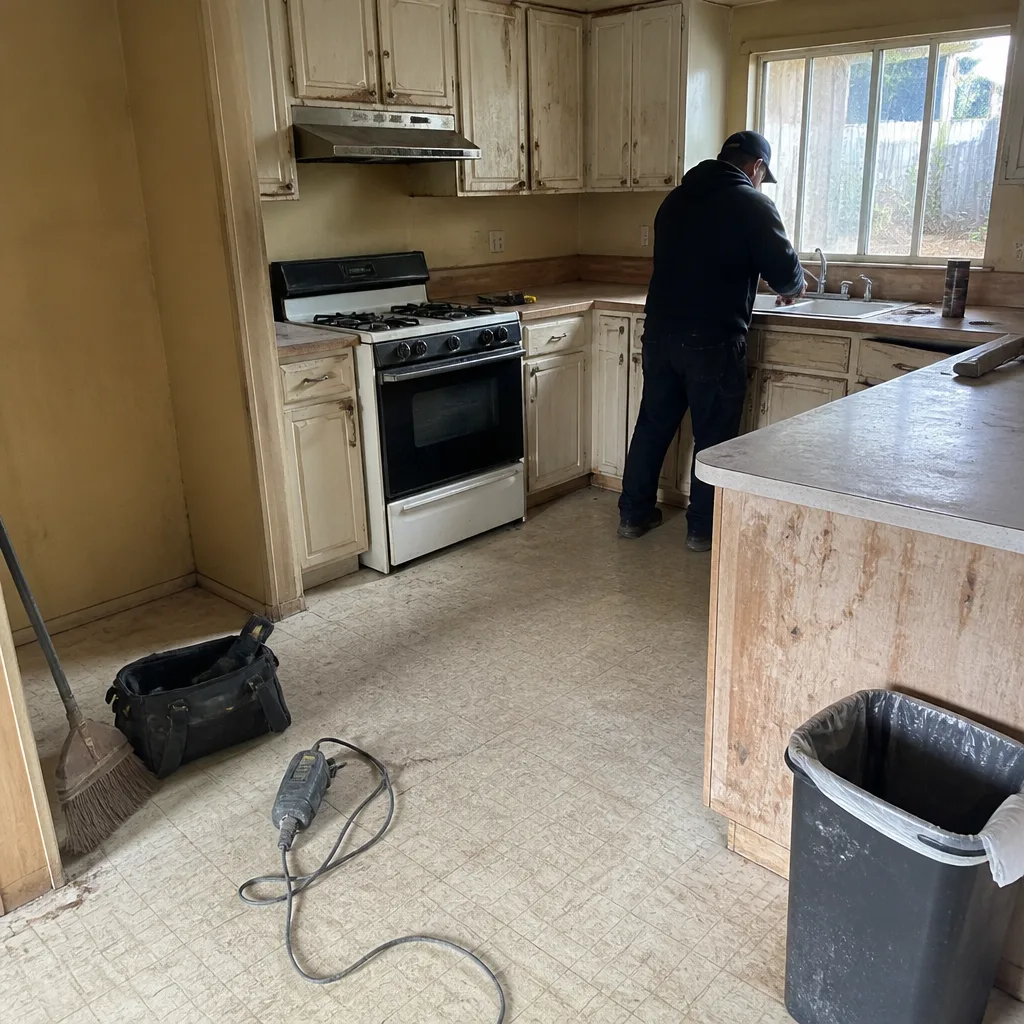 Before
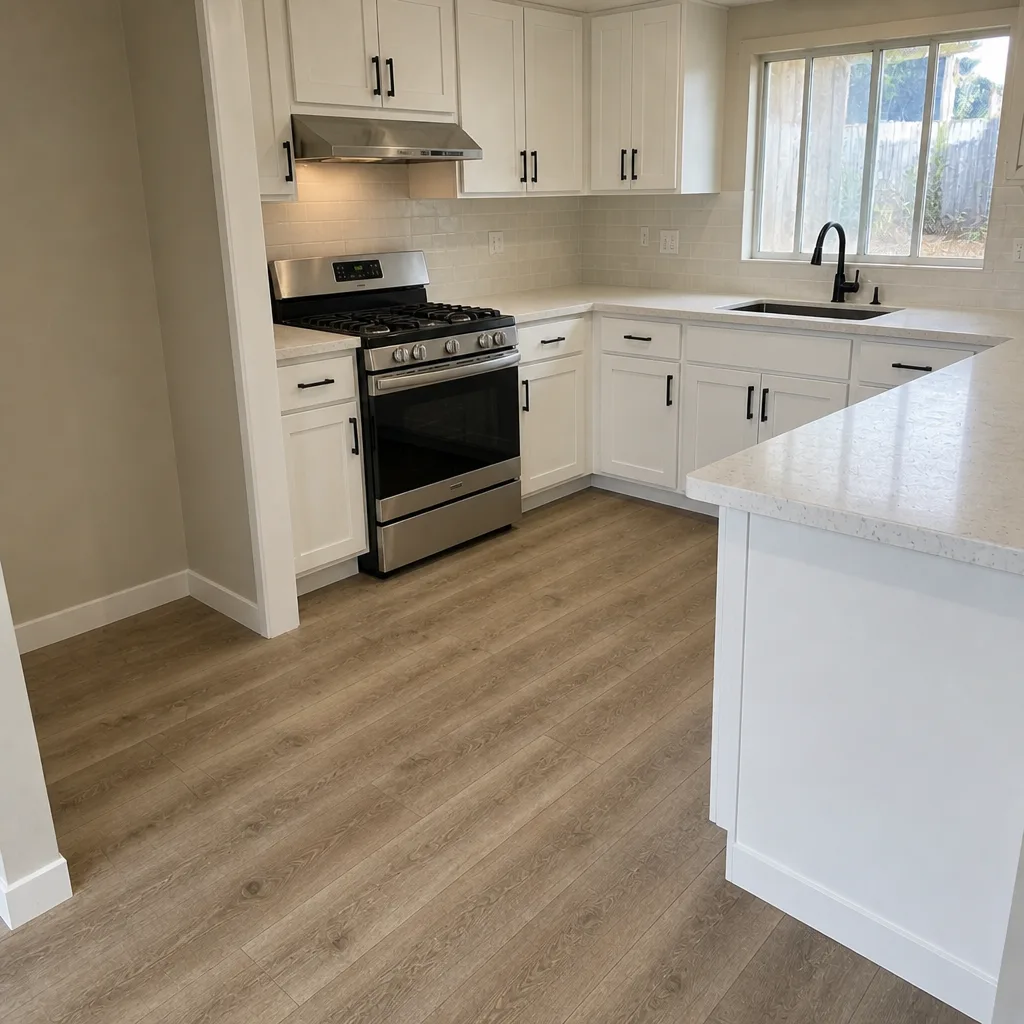 After
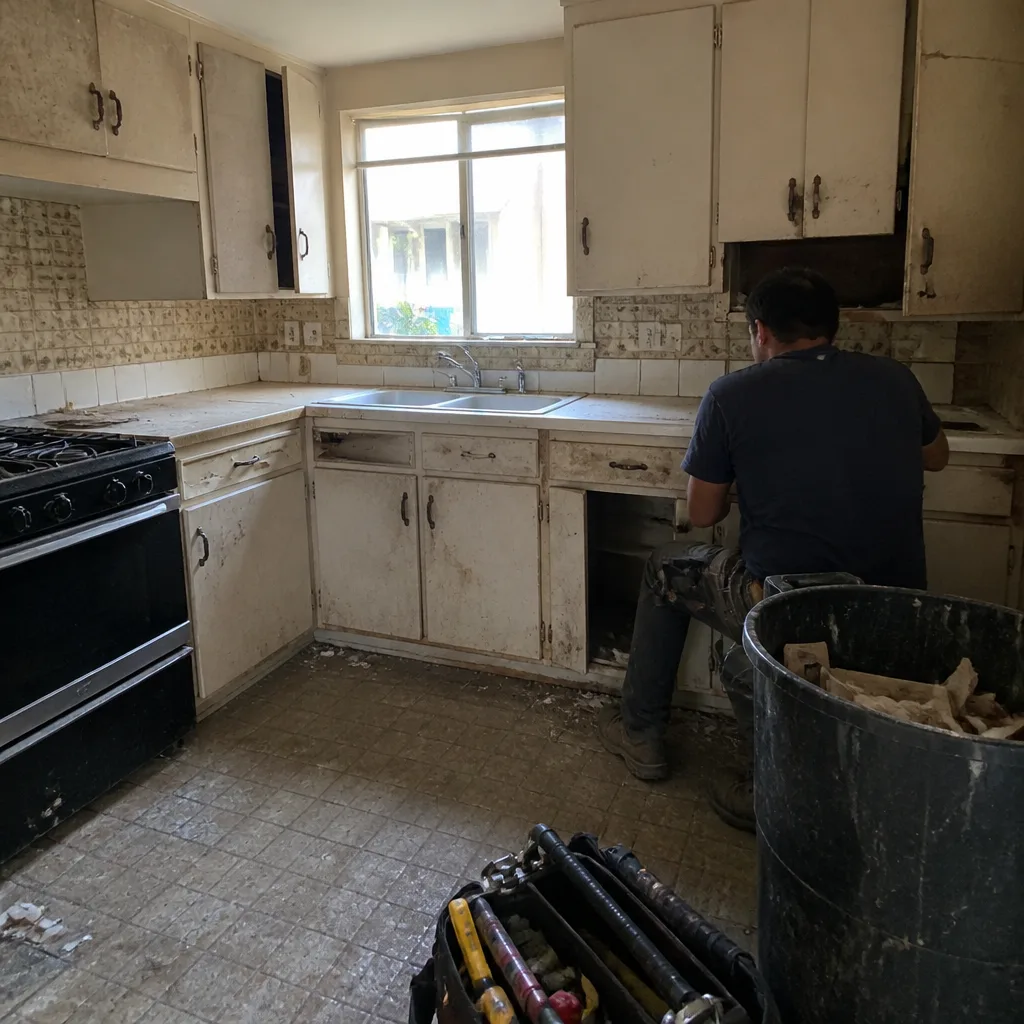 Before
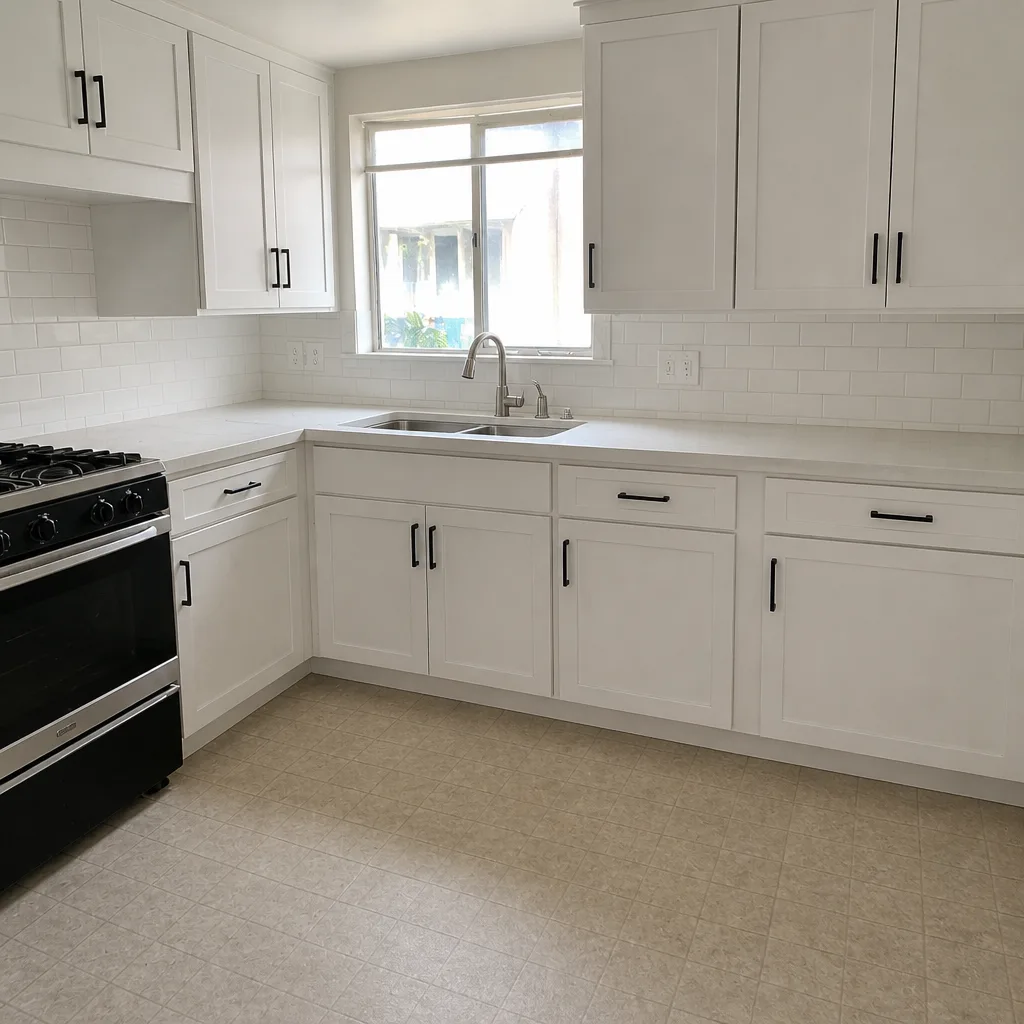 After
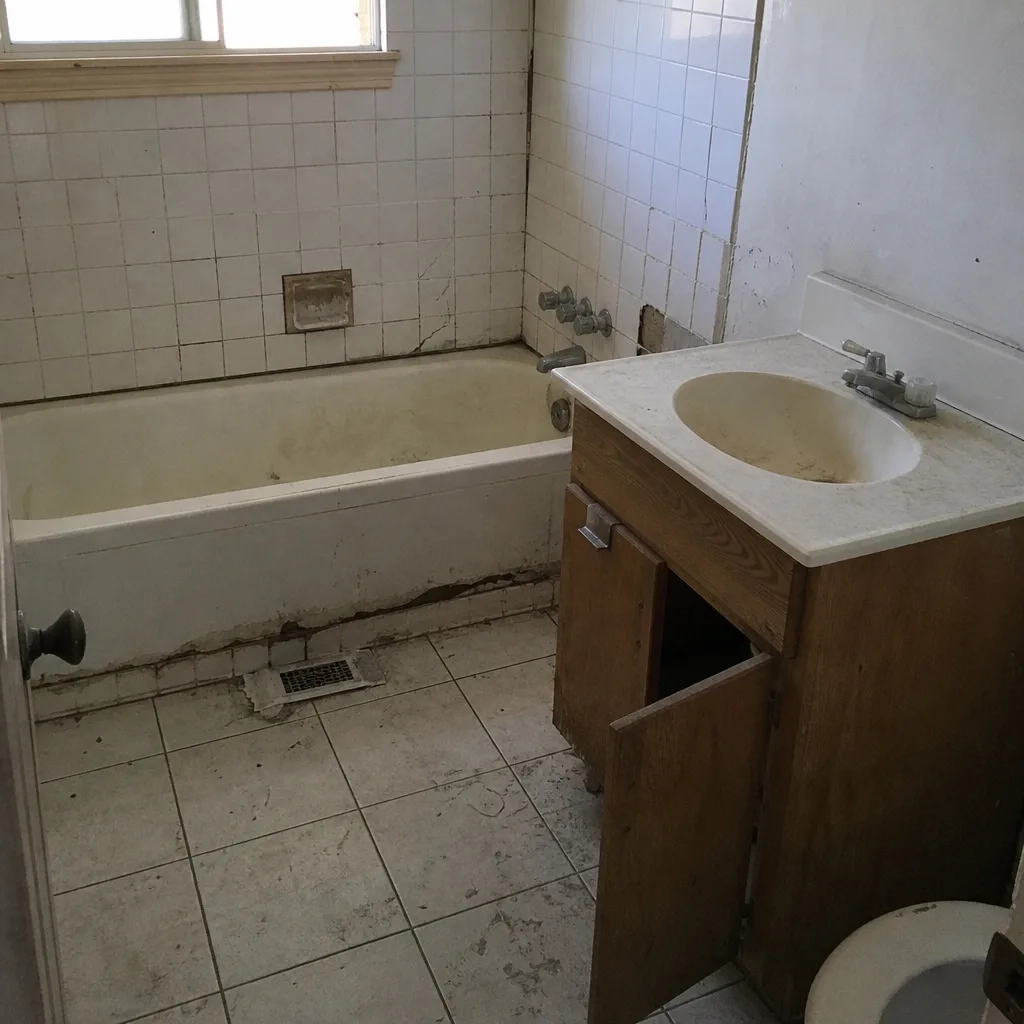 Before
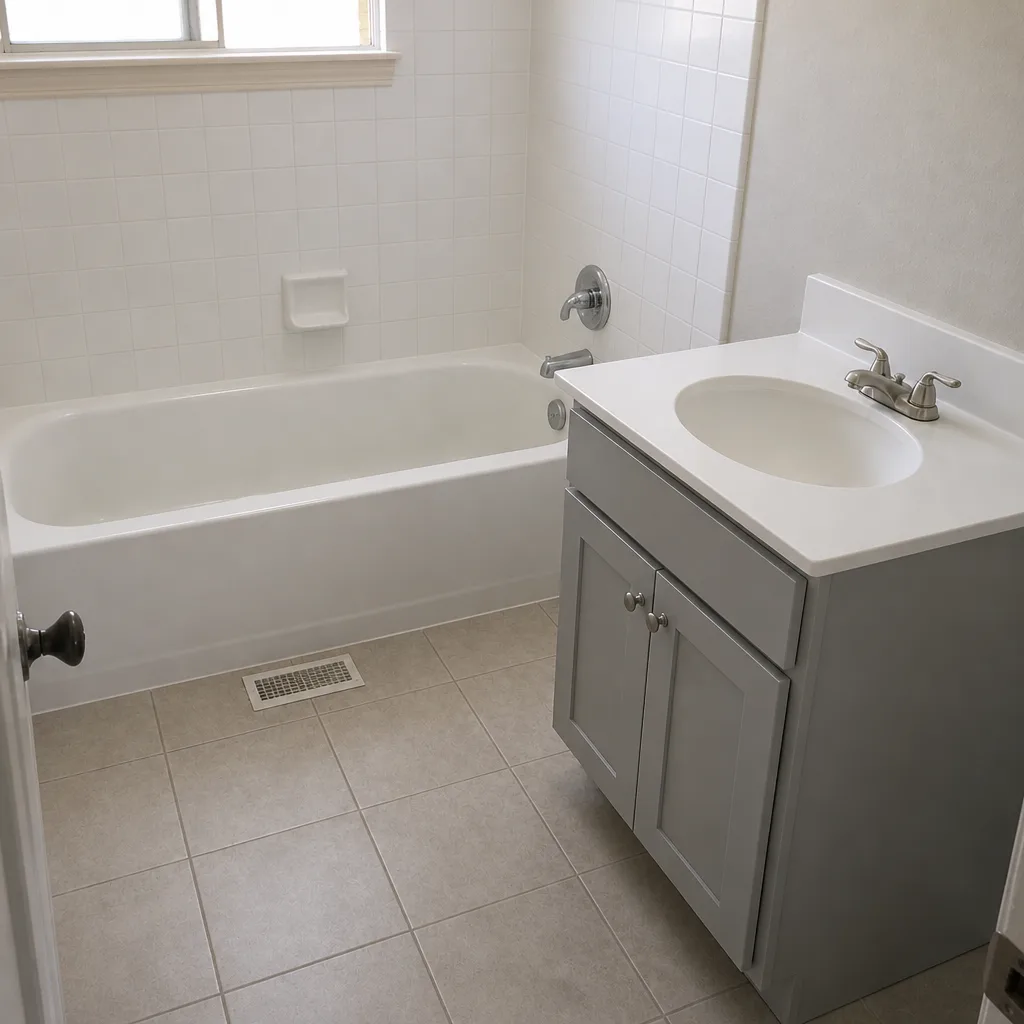 After
When to Call a Professional
Some things you handle. Others you call in. Call a professional the moment you see water staining near a window, on a ceiling, or at the base of an exterior door – that’s a sign something behind the finish has already failed. Call for any flashing or roof work, any gas or electrical task, and any subfloor or structural moisture concern. Call if a window or door seal has failed beyond the surface caulk, or if a bathroom exhaust fan has stopped moving air. And call if you’re unsure what your warranty actually requires, because misreading it is how claims get denied. Bradford Remodeling Co Concord offers free estimates in Concord for the work itself – call (866) 476-6447 and we’ll put a written price in front of you before anything starts.
Frequently Asked Questions
A home remodeling maintenance schedule is a seasonal list of upkeep tasks tied to the specific trade work in your home – caulk joints, grout, flashing, gutters, finishes, and ventilation – that keeps your manufacturer warranties and contractor workmanship guarantee valid. In Concord, it runs on a spring and fall cycle shaped by dry summers and wet winters. Call (866) 476-6447 for a free estimate on any repair that comes up.
Yes, it often can. Most manufacturer warranties and contractor workmanship guarantees include conditions that require routine maintenance, and skipping them can void coverage on their terms. Read both documents and treat any task that appears on either list as mandatory. If you’re unsure, call (866) 476-6447 and we’ll help you sort out what your guarantee requires.
Inspect exterior caulk joints every spring and re-caulk any that have cracked or pulled away, which in Concord’s dry summer heat is often every one to two years. Counter and tub joints get checked at the same time. This is the single most important task for keeping tile, window, and siding work covered. Call (866) 476-6447 if you’d like a pro to assess a failing joint.
A bathroom remodel requires annual grout sealing, caulk inspection at the tub and shower joints, and a working exhaust fan to control moisture – plus periodic checks for water staining. These tasks protect the tile, substrate, and moisture barrier you paid for. For a bathroom that needs serious work, our bathroom remodeling in Concord team offers free estimates – call (866) 476-6447.
You can handle caulk inspection, grout sealing, countertop care, gutter clearing, and visual checks yourself. Flashing and roof work, gas and electrical tasks, and any hidden moisture investigation need a licensed trade for both safety and warranty documentation. Call (866) 476-6447 when a task crosses that line and we’ll give you a written price first.
Yes. Every completed project comes with a documented scope, a signed written guarantee under the 365-Day Done Right Promise, and guidance on the maintenance tasks tied to your specific products and trades. If the work itself fails within the guarantee period, we return and correct it at no charge. Call (866) 476-6447 to start with a free estimate.
The Bottom Line

A maintenance schedule isn’t about preserving value in the abstract – it’s about protecting specific work you paid to have installed. Every task in this guide maps to a trade: caulk protects tile and frames, grout sealing protects shower and kitchen work, flashing and gutter checks protect roofs and windows, and finish care protects siding and doors. Keep the manufacturer’s list and the contractor’s workmanship conditions together, run a spring and fall inspection tuned to Concord’s dry summers and wet winters, and document what you do. That’s how your warranty stays valid and the work stays squared away. Ready to start a project or fix what’s failed? Bradford Remodeling Co Concord is your source for Bradford Remodeling Co Concord home services, and we’ll give you a written price before any work starts. Call (866) 476-6447 for a free estimate.
Written by the team at Bradford Remodeling Co Concord.