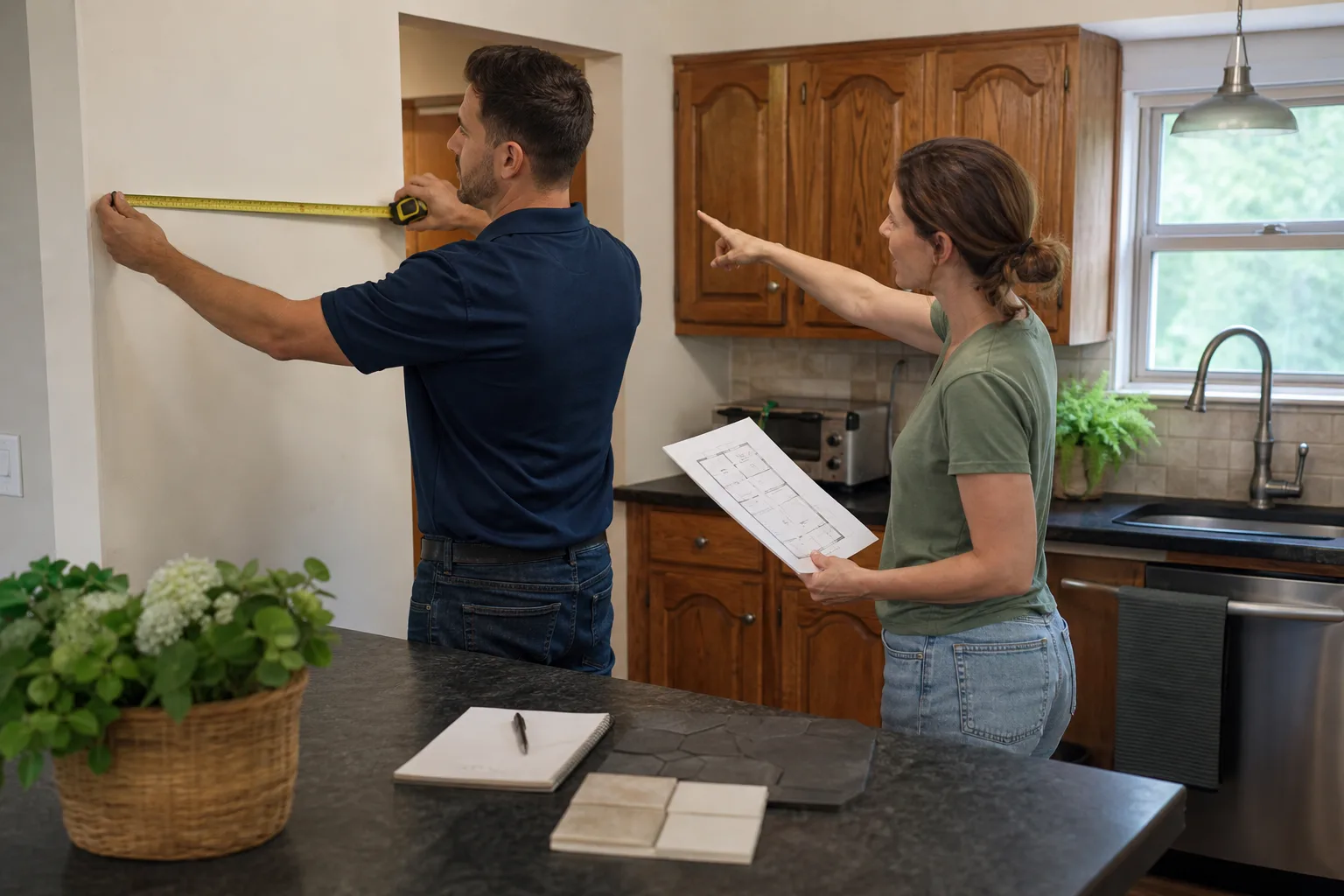
Last updated November 18, 2026




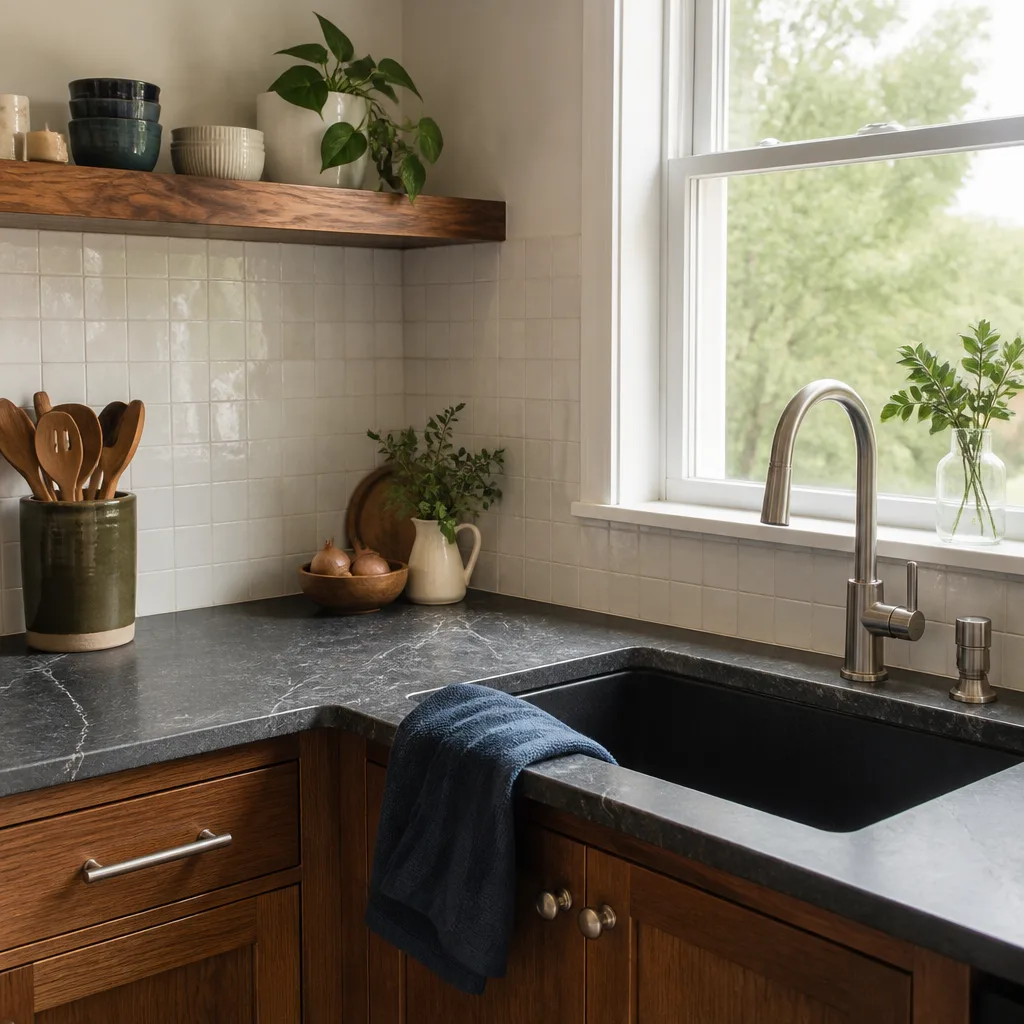


Free written scope consultation - allowances, timeline, and change-order rules on paper before a single trade is scheduled
Kitchen Remodeling Warning Signs Every Homeowner Should Know
The contractor who says “we’ll figure out the exact price once we’re into the walls” is not being honest about uncertainty. He’s reserving the right to charge you more after you’re already committed, after the cabinets are in a dumpster, and after your family is eating off a card table in the living room. Most of the red flags that sink a kitchen remodel show up during the bid, not during construction. They hide in plain language that sounds flexible, friendly, or accommodating. In this guide we’ll walk through the exact phrases, missing documents, and skipped steps that separate a squared-away contractor from one who’ll leave you holding the bill. We’ve watched these play out across Concord kitchens, from Clayton Way to the older homes off Salvio Street.
Quick Answer
The biggest red flags in kitchen remodeling are vague scope documents (words like “allowances,” “time and materials,” and “as needed”), a contractor who skips the permit, no written lien waiver process, and a license that isn’t active, bonded, and correctly classified for the work. Any one of these shifts cost and legal liability onto you as the property owner. A legitimate contractor puts the full price in writing before work starts and documents every deviation.
Styles & brands we work with
- Kitchen remodeling
- Bathroom remodeling
- Home additions & ADU
- Roofing
- Windows & doors
- Driveway & pavers
- Fence
Table of Contents
- The Bid Language That Exposes You to Overruns
- Why a Skipped Permit Costs You More, Not Less
- Structural Warning Signs During Demo
- Lien Waivers: The Paperwork That Protects Your House
- How to Verify a Contractor’s License in California
- Deposit and Payment Schedule Red Flags
- Communication and Site Conduct Signals
- Questions That Expose a Weak Contractor
The Bid Language That Exposes You to Overruns
A kitchen bid is a contract, and the words in it are load-bearing. Three phrases in particular hand the contractor a lever to raise your price after you’ve signed, and they’re common enough that homeowners skim past them.
“Allowance.” An allowance is a placeholder number for a material the contractor hasn’t priced yet, usually tile, lighting, or countertops. A $500 tile allowance sounds fine until you pick a slab you actually want that costs $2,400. You pay the difference. Allowances aren’t automatically dishonest, but a bid built almost entirely on them isn’t a price; it’s an estimate dressed up as a price. A written price means the number is the number.
“Time and materials” (T&M). Under T&M, you’re billed for hours worked plus materials, with no ceiling. If the job runs long, you pay for the overrun. Legitimate contractors do use T&M for genuinely unknown work, like opening a wall to inspect framing, but it shouldn’t be the pricing structure for a whole kitchen. You want a fixed written price with a defined scope.
“As needed” and “as required.” These phrases sound harmless in a scope document. In practice they mean the contractor decides later what’s needed, and bills you for it. “Replace subfloor as needed” can mean a $200 patch or a $3,000 rebuild. A clean scope says exactly what gets replaced and under what conditions.
We’ve seen Concord homeowners sign bids where the only firm number was the deposit. The rest was allowances and “as needed” language. None of that is a written price. When Bradford Remodeling Co Concord puts together a kitchen remodeling in Concord quote, the material specifications and the labor are priced before a tool comes out, and the specs trace to documented brands like KraftMaid, Wellborn, Cambria, and Kohler so there’s nothing to “figure out later.”
Why a Skipped Permit Costs You More, Not Less
A contractor who offers to skip the permit is not saving you money or time. He’s transferring liability to you, because you own the property and the permit record is tied to the address, not to him.
Here’s what actually happens when a kitchen remodel runs without a permit:
- Disclosure when you sell. In California, unpermitted work must be disclosed. Buyers discount for it, or walk. A permitted kitchen holds value; an unpermitted one becomes a negotiation problem.
- Failed inspection, forced tear-out. If the city discovers the work, you may be required to open walls back up so the inspector can see the rough-in, electrical, and plumbing. That’s your cost.
- Insurance trouble. If a fire or water loss traces to unpermitted electrical or plumbing, the claim can be contested.
- Code issues nobody caught. Concord’s older housing stock, much of it built before the 1980s, has wiring and plumbing that predates current code. A permit triggers an inspection that catches a dangerous condition while the wall is open.
A legitimate contractor pulls the permit in his name and schedules the inspections. Contractors who’ve been at this a while know the difference between a Concord kitchen that needs a simple permit and one that triggers a deeper check, so they price the inspection time in.
- Ask, in writing, who pulls the permit and whose name goes on it.
- Ask what inspections the job will require and who schedules them.
- Confirm permit fees are listed as a line item, not buried.
Structural Warning Signs During Demo
This is where the honest contractor and the one who keeps swinging part ways. When the cabinets and drywall come out, surprises show up. Water damage, rotted subfloor, a joist that’s been notched for plumbing, knob-and-tube wiring, or a load path that doesn’t match the drawings.
A legitimate contractor stops, photographs what he found, documents it in writing, and brings it to you before proceeding. He may hand you a change order with a fixed price for the fix. What he doesn’t do is keep working and surprise you at the end with a big number.
The red flag is a contractor who doesn’t want to stop. Watch for these behaviors during demo:
- He brushes past a structural issue with “that’s normal, we’ll handle it” and no written change order.
- He frames a surprise wall repair as just another thing, with no new line-item price.
- He doesn’t photograph the open walls. Photos are your only record of what was really there.
- He cuts a joist to run a drain or doesn’t know if a wall is load-bearing and doesn’t call for an engineer.
Concord homes in the older neighborhoods frequently turn up with subfloor softness under the sink from decades of slow leaks, and galvanized plumbing that’s near the end of its life. A disciplined contractor flags those in writing before he covers them up. That’s the difference between a fix and a cover-up. If you’re planning a larger scope, our General Contractor in Concord page covers how the sequence should run.
Lien Waivers: The Paperwork That Protects Your House
A mechanics lien is a legal claim against your property filed by someone who wasn’t paid for work or materials on it. It attaches to the house, not the contractor. That means a subcontractor or a lumber supplier who was never paid by your general contractor can file a lien on your home, even though you paid the general contractor in full.
The protection is the lien waiver. It’s a signed document from the general contractor and, on a kitchen, from the subcontractors and material suppliers, confirming they’ve been paid for their portion and are releasing their right to lien your property. There are two kinds: a progress waiver (for each payment milestone) and a final unconditional waiver (at project close).
The red flag is a contractor who treats lien waivers as a nuisance. He’ll say “you don’t need those, we pay our subs.” That’s not a guarantee, that’s a promise with nothing behind it.
- Ask for a progress lien waiver with every payment, from the general contractor and any subcontractor on the job.
- Hold final payment until you have final unconditional lien waivers from every party who touched the job.
- Confirm the waiver names your property address and the correct dollar amount.
- Keep every waiver in a folder. If a lien is ever filed, that folder is your defense.
Bradford’s process ties this to the money: payment milestones are defined in the written price, and each one is accompanied by a signed waiver, so your title stays clean.
How to Verify a Contractor’s License in California
A contractor who tells you he “doesn’t really have a license for this kind of work” is telling you he isn’t legally qualified to touch your kitchen. In California, the Contractors State License Board (CSLB) issues licenses, and any job over $500 in labor and materials requires a licensed contractor.
Verification is fast, and it’s free. Here’s the process:
- Look up the license at the CSLB website. Search by name or license number and confirm the status is “Active,” not “Expired,” “Suspended,” or “Revoked.”
- Check the classification. A General Building Contractor’s license (B) covers whole-kitchen remodels. A specialty license like C-54 (tile) or C-6 (cabinet) doesn’t cover general construction. A contractor with the wrong classification for your scope isn’t licensed to do the work.
- Confirm the bond. Every licensed California contractor must hold a surety bond. The CSLB listing shows it. Bond status is a real consumer protection, not a formality.
- Verify workers’ compensation coverage. If he has employees, he’s required to carry workers’ comp. If he doesn’t, an injury on your property becomes your problem.
- Ask for the certificate of insurance directly, for both liability and workers’ comp, and call the insurer to confirm it’s current.
This takes maybe ten minutes. A contractor who gets defensive when you ask is telling you something. We list our license and bond status on request, and we expect homeowners to verify it.
Deposit and Payment Schedule Red Flags
California law caps the deposit a contractor can collect before work begins at 10% of the contract price or $1,000, whichever is less. A contractor demanding 30% or 50% up front is asking you to fund his overhead on your kitchen.
The red flags in payment:
- A large upfront deposit. Ten percent or $1,000, whichever is less, is the legal ceiling.
- Payment tied to nothing. Every payment should be attached to a milestone: demo complete, rough-in inspected, cabinets set, countertops installed.
- Cash-only. A contractor who wants your money in cash with no invoice is one who can’t offer a proper paper trail or a written guarantee.
- Vanishing money. A contractor who asks for the full cost of materials the day before delivery but can’t produce a supply order or purchase agreement.
Bradford Remodeling Co Concord ties every payment to a written milestone, defined in the price before work begins. Payments don’t move until the milestone is done and inspected.
Communication and Site Conduct Signals
The way a contractor behaves during the bid is usually how he behaves during the job. If he’s late to the estimate, he’s likely to be late to the site. If he can’t answer a question about his own scope, he probably can’t handle a change order.
Signs to watch for during the bid and early in the project:
- No written scope. The bid is verbal or a one-page number with no breakdown. Ask for the line items.
- No response after the estimate. A contractor who disappears after providing a number is showing you how he’ll handle the project.
- No uniform, no identification. When the crew arrives, do you know who’s on site and who has been checked?
- Messy site. If the bid visit left debris or the contractor’s truck is a disaster, the site will be too.
- No written change-order process. Every deviation should be priced and signed before work continues.
Bradford runs background checks on every technician and puts them in uniform, so you know exactly who’s in your house. Calls are answered by a live person around the clock, not a voicemail.
Questions That Expose a Weak Contractor
The fastest way to separate a disciplined contractor from a talker is to ask five specific questions and watch how he answers.
- “Can I see the written price as a line-item breakdown, including tile and lighting?” A disciplined contractor provides it on request. A vague one says “we’ll get to that later.”
- “Whose name is on the permit?” The correct answer is the contractor’s, and he schedules the inspections.
- “What does your guarantee cover, and for how long?” A real answer is specific, in writing, and covers corrective labor and material.
- “Can I see the lien waiver process on a recent job?” A confident answer describes progress and final waivers. A weak one deflects.
- “What happens if you find rotted subfloor after demo?” The right answer is: you stop, photograph, document, and give a written price for the fix before proceeding.
We ask the same questions of ourselves. Bradford operates to a documented standard, and every price and guarantee is in writing before work starts. If you want to know the difference, our Bathroom Remodeling in Concord page shows the same process applied to a smaller room.
Common Mistakes to Avoid
- Choosing the lowest bid. The lowest bid usually wins by leaving things out of scope or pricing them as allowances that grow later. Compare line items, not totals.
- Signing a bid with no material specifications. “Tile as selected” is not a specification. Brand and model should be named, like Cambria for a quartz surface or Moen for a faucet.
- Skipping the license check. Two minutes on the CSLB site can save you a legal fight. Verify status, classification, and bond.
- Ignoring the deposit cap. A contractor who asks for 40% up front is over the legal limit and communicating something about how he runs the business.
- No written change orders. A verbal change order is a dispute waiting to happen. Every deviation should be priced and signed before the work continues.
- Not asking for lien waivers. Without waivers from the general contractor, subs, and suppliers, you’re exposed to a mechanics lien even after paying in full.
- Believing “we’ll handle it.” No matter what the surprise is during demo, “we’ll handle it” without a written change order is the phrase that precedes an overrun.
See the difference
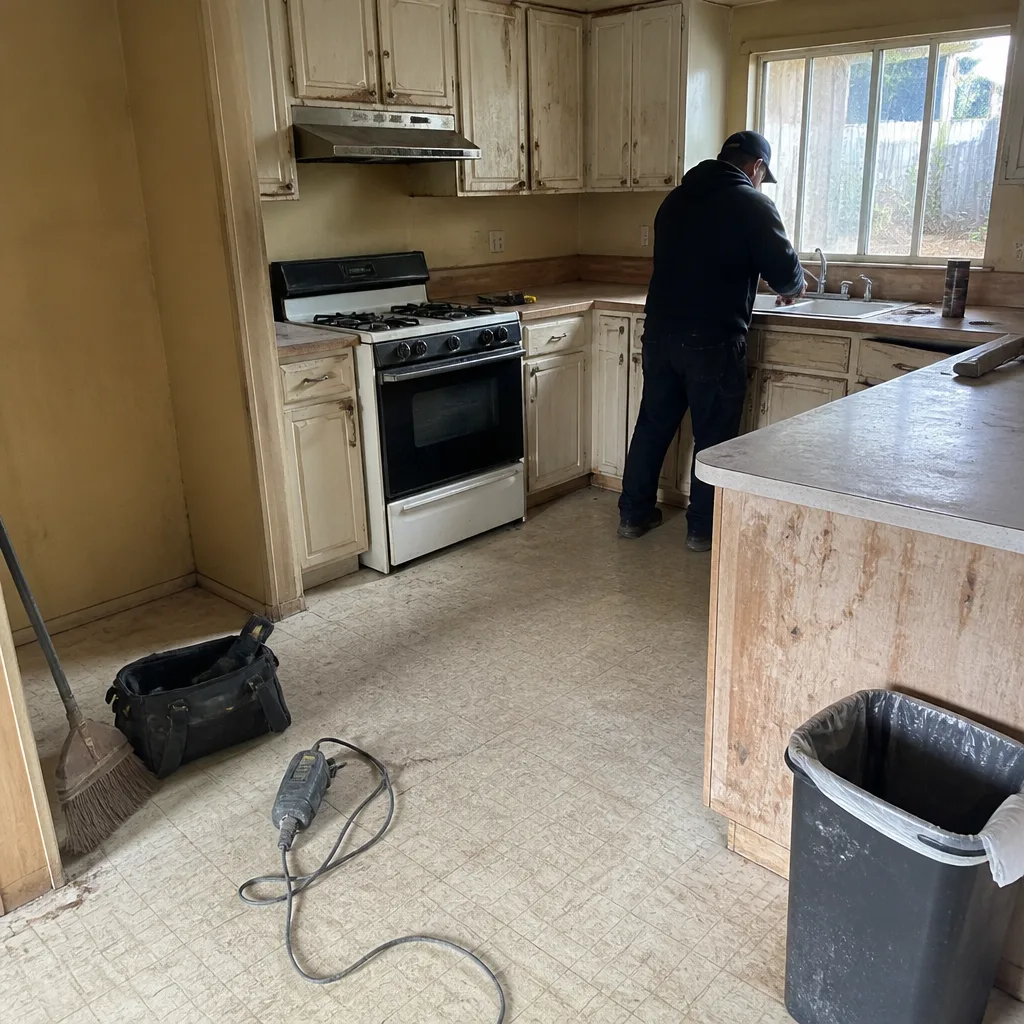 Before
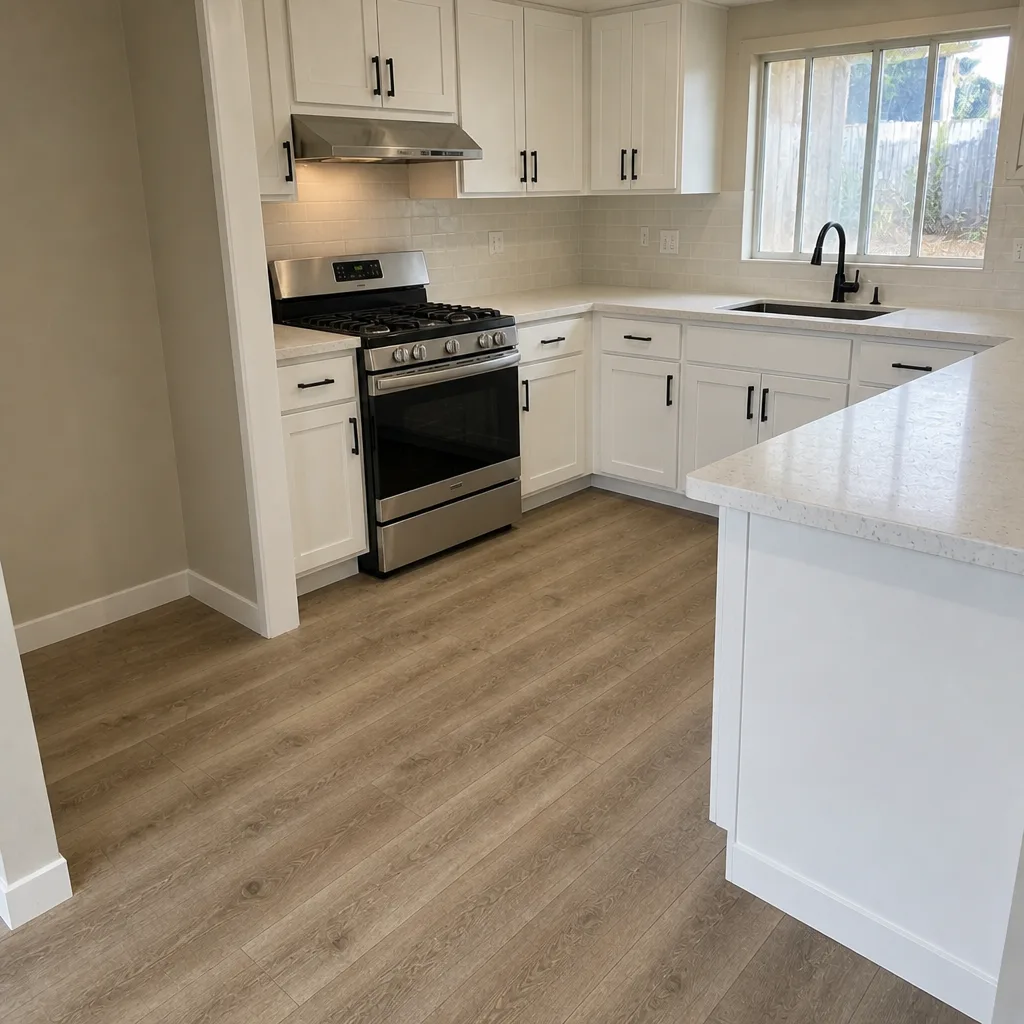 After
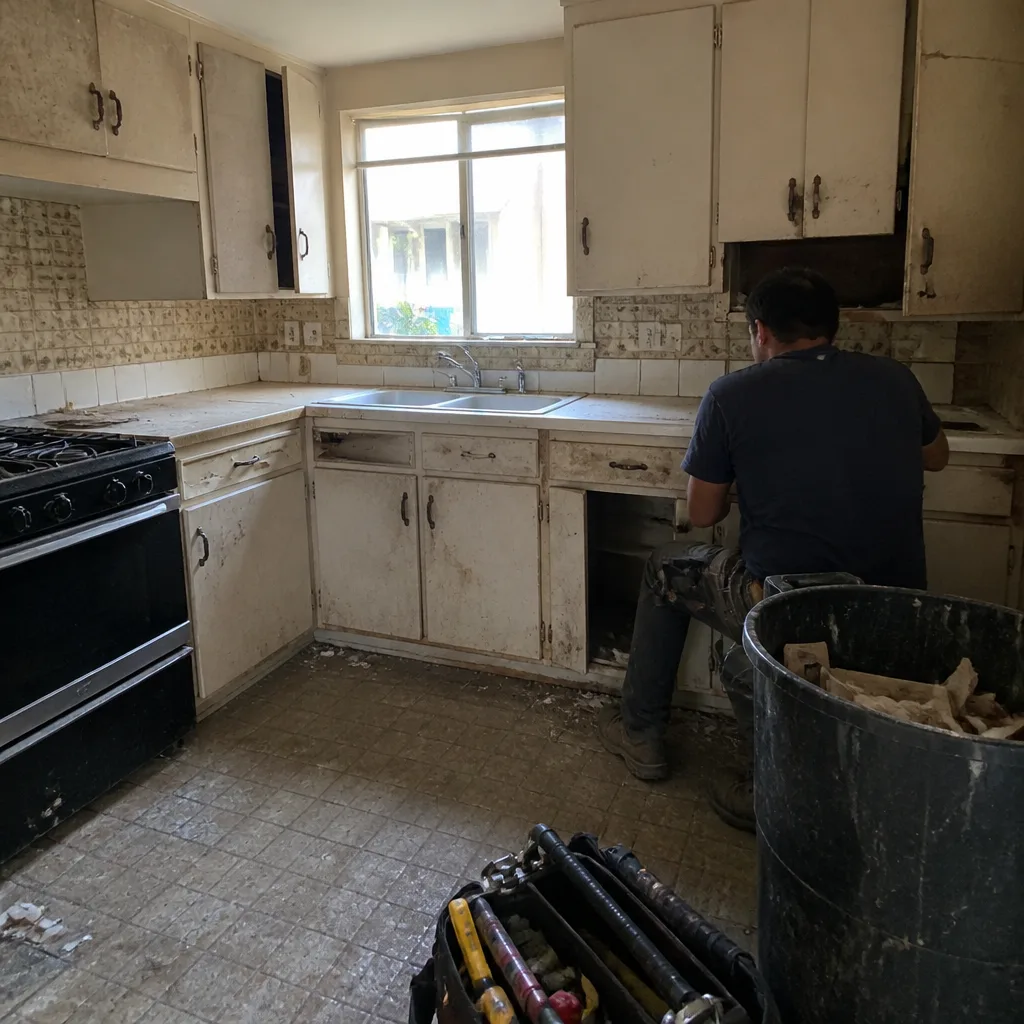 Before
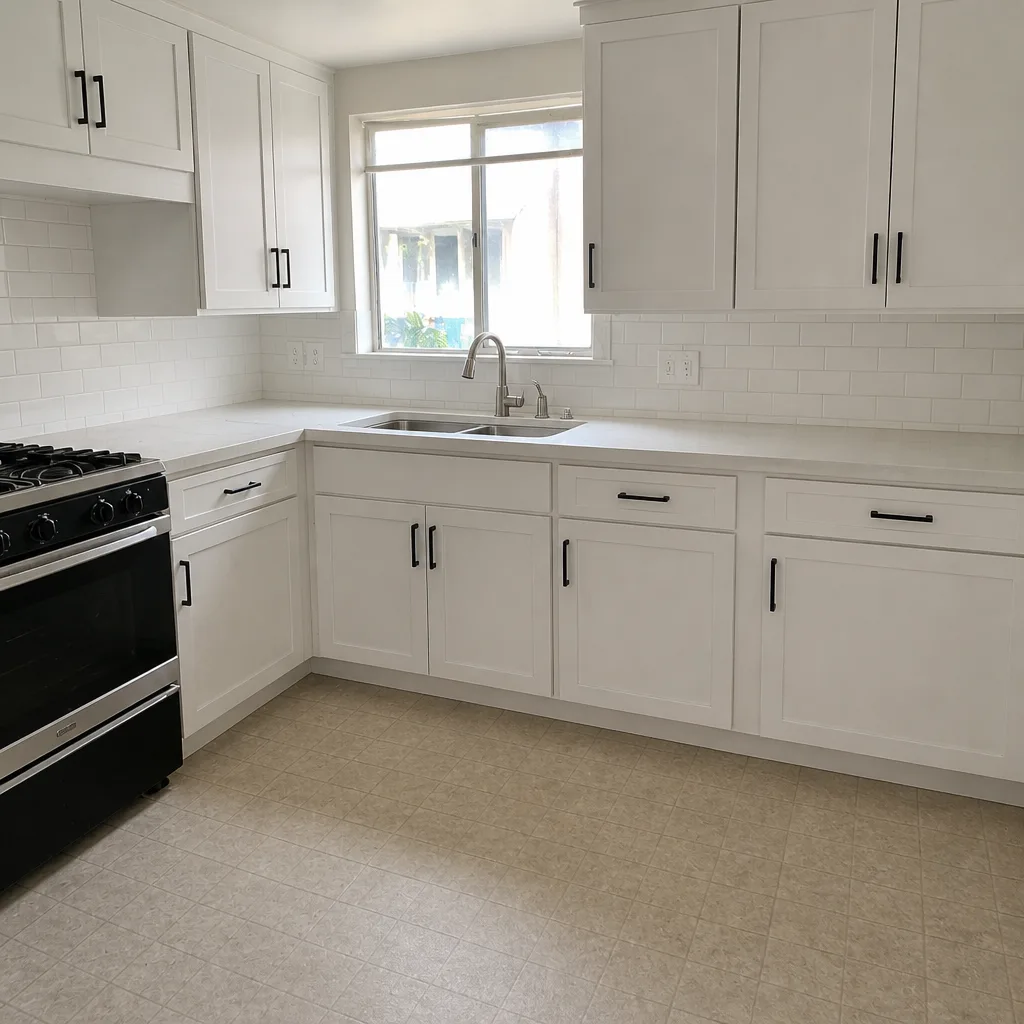 After
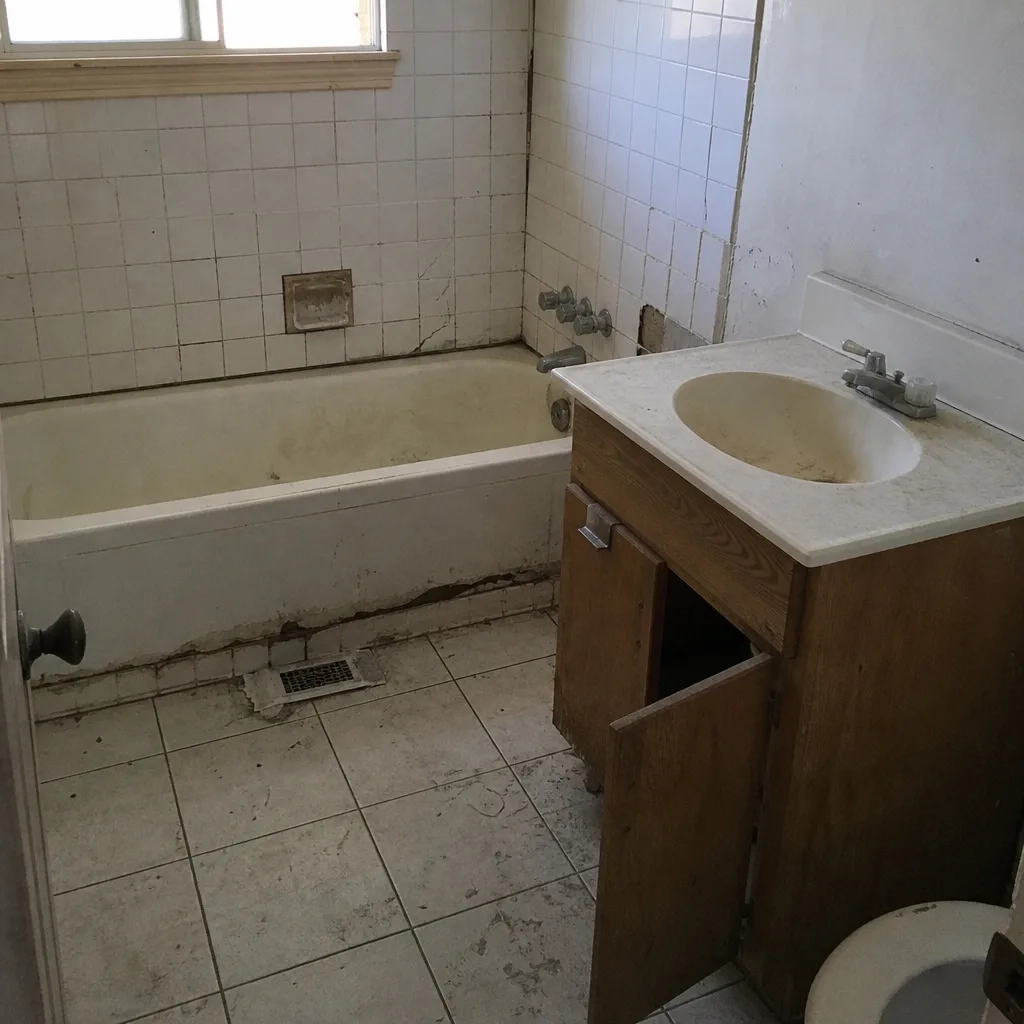 Before
 After
When to Call a Professional
If you’re assembling bids for a Concord kitchen and any of the following is true, it’s time to talk to a disciplined contractor: your bid has no line-item price, the contractor can’t or won’t pull the permit, your license check came back expired or with the wrong classification, or you’re being asked for more than a 10% deposit. Also call if you’re already mid-project and the contractor has stopped documenting discoveries or can’t produce a lien waiver. And if you’re not sure what you’re looking at, a professional will tell you straight. Bradford Remodeling Co Concord offers free estimates in Concord. Call (866) 476-6447 to schedule yours, and we’ll walk through your scope, your permit, and your written price before anything else.
Frequently Asked Questions

Kitchen remodel costs vary widely based on scope and material choice. A modest refresh with new countertops and refaced cabinets runs in a lower range, while a full gut with new cabinets, electrical, plumbing, and flooring runs higher, especially in Concord’s older homes where substructure work is common. The only way to get a real number is a written line-item estimate for your specific scope. Call (866) 476-6447 for an exact quote. Estimates are free.
Not if the price is in writing and the scope is defined. Brady Remodeling provides a written price before work begins, and changes to scope happen only through a signed written change order with a fixed price. Any contractor who “re-prices at the door” or prices on time and materials is exposing you to overruns. Call (866) 476-6447 for a written price on your Concord kitchen.
Yes. Permits are pulled in the contractor’s name and inspections are scheduled throughout the job. A contractor who offers to skip the permit is transferring liability to you as the property owner. Call (866) 476-6447 to talk through what permits your Concord kitchen will need.
A lien waiver is a signed document confirming that a contractor, subcontractor, or supplier has been paid and is releasing the right to file a mechanics lien against your property. Without a final waiver at project close, you can pay in full and still end up with a lien on your home. Call (866) 476-6447 to see how our waiver process works.
Look up the contractor on the CSLB website by name or license number. Confirm the status is “Active,” the classification (B for general building) matches your scope, and the surety bond and workers’ compensation coverage are current. A licensed contractor will hand you the number without hesitation. Call (866) 476-6447 to verify ours.
The 365-Day Done Right Promise is a written guarantee on every Bradford project. If the completed work fails within the guarantee period, we come back and correct it at no charge. It covers corrective labor and material related to workmanship. Call (866) 476-6447 for the full written terms.
The Bottom Line
The warning signs of a bad kitchen remodel show up during the bid, not during the job. Vague scope language like “allowances,” “time and materials,” and “as needed” is a lever for overruns. A skipped permit transfers liability to you, the owner. No lien waiver process is a financial exposure, not a paperwork detail. A license that’s inactive, unclassified, or unverified is a disqualifier. Payment schedules that demand more than 10% up front or aren’t tied to milestones are a way to fund the job with your money. The fix is discipline: a written price, a documented scope, verified credentials, and a written guarantee. Bradford Remodeling Co Concord operates to The Garrison Standard, with a written price before work starts and a 365-Day Done Right Promise on every completed project. Call (866) 476-6447 to schedule your free estimate. See our Bradford Remodeling Co Concord home page for the full range of services.
Written by the team at Bradford Remodeling Co Concord.