Last updated November 18, 2026

Free written scope consultation - allowances, timeline, and change-order rules on paper before a single trade is scheduled
DIY vs Professional Kitchen Remodeling: What’s Safe to Do Yourself
Painting your own cabinets can save $2,000 – $4,000 and look genuinely professional if you put the prep work in. Relocating your own kitchen sink can void your homeowner’s insurance for water damage if the connection fails and no permit was pulled. Those two facts sit at the heart of the DIY debate in kitchen remodeling, a room that concentrates electrical, plumbing, gas, and structural work into a space smaller than most bedrooms. We’ve walked into plenty of Concord kitchens where a weekend project turned into a five-figure correction. This guide draws the line precisely: where your labor adds real value, and where it creates liability you may not be able to insure.
Quick Answer
Safe DIY: demolition of non-load-bearing elements, cabinet painting, backsplash tile over existing substrate, hardware and fixture swaps, and cleanup. Leave to licensed pros: any electrical, plumbing, or gas work that moves or adds a connection, plus anything structural. In Concord and across California, moving a sink, running a new circuit, or disconnecting a gas range generally requires a permit, and in most cases that permit has to be pulled by a licensed contractor. Do the finishes yourself; let the licensed trades do the work behind the walls.
Styles & brands we work with
- Kitchen remodeling
- Bathroom remodeling
- Home additions & ADU
- Roofing
- Windows & doors
- Driveway & pavers
- Fence
Table of Contents
- Where California Draws the Permit Line in a Kitchen
- High-Value DIY Tasks That Don’t Require a Permit
- Tasks Where a DIY Mistake Cascades (and Costs More Than the Savings)
- Acting as Your Own GC: What It Really Saves
- What Your Insurance Policy Likely Says About Unpermitted Work
- The Safety Line: Gas, Springs, and Sharp Things
- Concord-Specific Factors: Climate, Codes, and Resale
- What “Squared Away” Looks Like at Job Close
Where California Draws the Permit Line in a Kitchen
California’s building codes are among the strictest in the country, and the kitchen is where they concentrate hardest. Under the California Building Standards Code, any electrical, plumbing, or mechanical work that alters the system typically requires a permit. Swapping a faucet is one thing; moving the drain line or adding a 240-volt circuit for a range is another. Your city’s building department enforces this locally, and while California does allow an owner-builder to pull some permits on a home they occupy, the licensed-trade work still has to be performed by a licensed professional in most jurisdictions.
Here’s the trade-by-trade picture for a typical kitchen:
- Plumbing: Faucet and supply-line replacement usually doesn’t need a permit. Moving a sink, relocating the drain, adding a dishwasher drain, or running new supply lines does. These are licensed-plumber work.
- Electrical: Swapping a light fixture or cover plate is fine. Adding a circuit, moving an outlet, installing under-cabinet lighting with new wiring, or upgrading to a 240-volt induction range circuit requires a permit and a licensed electrician.
- Gas: Connecting or disconnecting a gas range is licensed-plumber or licensed gas-fitter territory. No exceptions. Gas leaks are not a homeowner DIY category.
- Structural: Removing a wall, cutting a header, or opening a load-bearing span requires engineering and permits. The wall between a kitchen and dining room is often load-bearing, even when it looks like it isn’t.
In Concord, we’ve seen homeowners get tripped up by the assumption that “it’s my house, so I can pull the permit.” Some permits, yes. But the work behind them has to be done by someone the state has licensed. That’s a hard line, and it’s why our General Contractor in Concord conversations start with the scope map, not the shopping list.
High-Value DIY Tasks That Don’t Require a Permit
If your heart is set on doing some of the work, the good news is that a lot of the visible, high-satisfaction work in a kitchen remodel is within reach of a careful homeowner with good prep habits. These are the tasks we regularly see homeowners do well, and the ones where your labor saves real money without touching a permit.
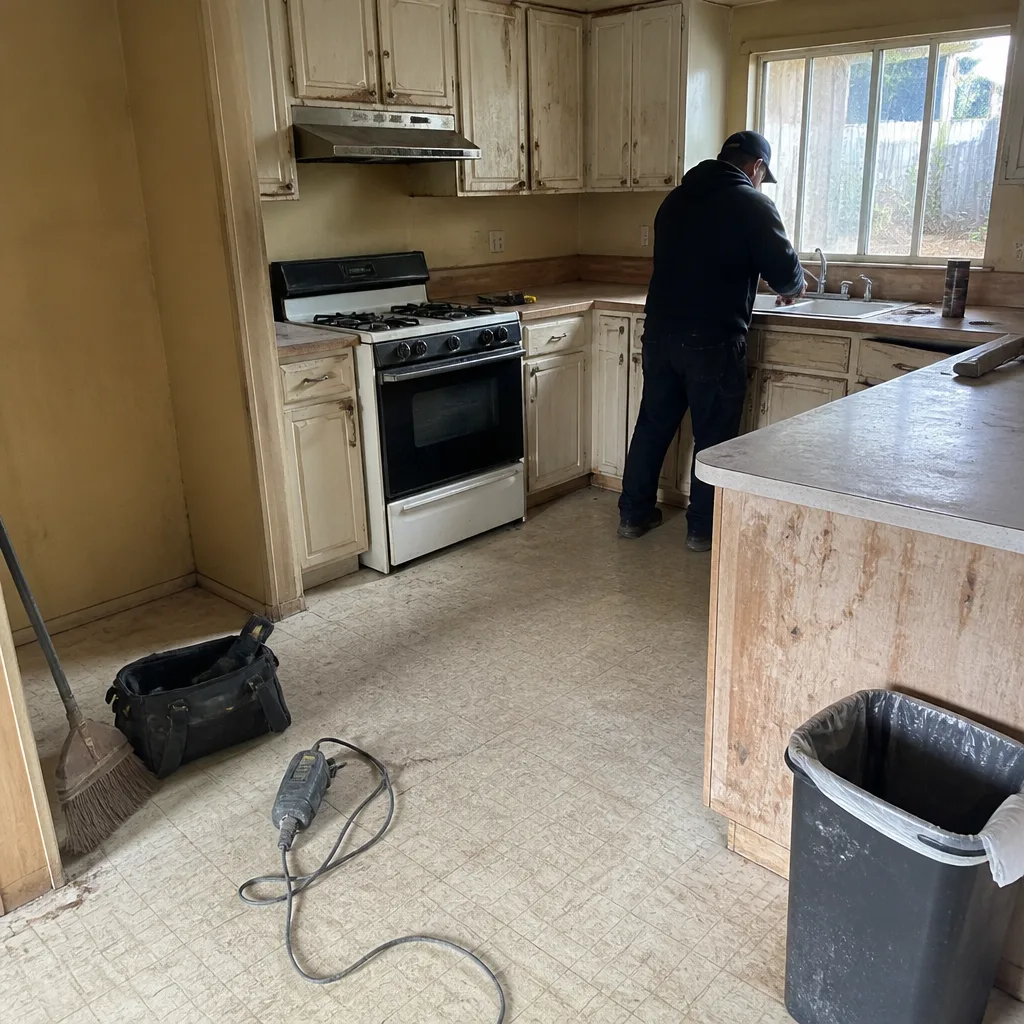
- Demolition of non-load-bearing elements. Pulling out old cabinets, removing a non-structural peninsula, hauling out old appliances, and stripping old backsplash tile. The work is dirty but low-risk. Before you swing a hammer: have a professional confirm the wall isn’t load-bearing, and have utilities safely disconnected first.
- Cabinet painting. A well-prepped cabinet paint job can save $2,000 – $4,000 versus replacement. The secret is in the prep: degrease, sand, prime with a bonding primer, then use a cabinet-grade paint sprayed or brushed with a fine finish. Rushed prep shows in year two.
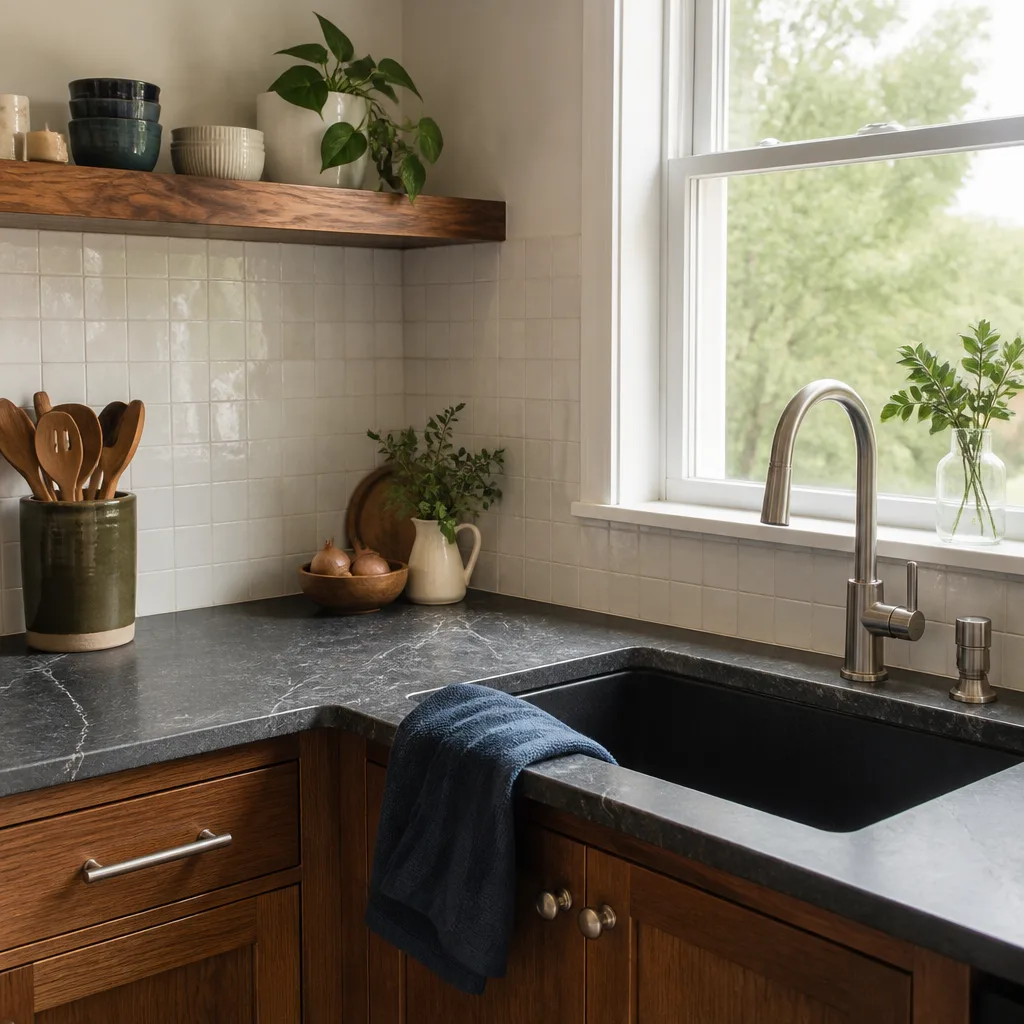
- Backsplash tile over existing substrate. If your drywall is sound and flat, you can tile right over it. Layout, spacing, and grout are skill-based but learnable. Bad layout shows. Watch your level line like a hawk.
- Hardware and fixture replacement. Cabinet pulls, hinges, faucets, and lighting trims. Swapping these updates the look for a few hundred dollars.
- Painting walls and ceilings. Standard drywall painting, with proper masking, is one of the cleanest wins in the project.
The pattern: DIY works best where the work is surface and finish, not systems and structure. The visible layer is where your hours go furthest. The hidden layer is where the liability lives.
Tasks Where a DIY Mistake Cascades (and Costs More Than the Savings)
There’s a specific category of DIY decision where the correction cost is wildly out of proportion to what you saved. These are the jobs where a small error doesn’t show up for months, then reveals itself as a $6,000 repair. In our experience, three stand out:
The dishwasher drain loop. The dishwasher drain hose must loop up high under the counter before it connects to the disposal or drain. Skip the loop, and dirty sink water siphons backward into the dishwasher. It smells, it grows things, and by the time you figure it out the dishwasher drain pump is failing. A five-minute detail with a $4,000 consequence.
Unsupported countertop overhangs. A stone countertop on a peninsula with more than a foot of unsupported overhang will eventually crack. Stone is strong in compression, weak in flex. The support brackets that prevent it cost $80. The countertop replacement costs several thousand, and it isn’t covered under warranty when the overhang was engineered out of spec.
Gas range connections. This one needs to be stated plainly: we recommend no homeowner attempt to connect or disconnect a gas appliance themselves. A gas connection that looks tight and passes a soapy-water test on the day of install can leak slowly for months. Gas work belongs to a licensed professional, full stop. It’s the first thing we route to a licensed gas fitter on any Concord project.
The pattern here is that the savings on the DIY version is small and one-time. The correction cost is large and comes with side effects: downtime, replacement materials, and often the loss of product warranty because the install was out of spec. On Kitchen Remodeling in Concord, this is exactly the category of job we schedule to licensed trade partners before demo even starts.
Acting as Your Own GC: What It Really Saves
The most interesting middle path in this whole discussion is the homeowner who doesn’t want to do the licensed trade work but does want to run the project. You hire the electrician, the plumber, the cabinet installer, and the countertop fabricator directly. You sequence the job, you hold the budget, and you take responsibility for the interfaces between trades. That’s what acting as your own general contractor looks like.
What it realistically saves: 15 – 25% of a typical full-service GC markup, on a job that would otherwise cost $40,000 – $80,000 in the Concord market. What it costs: your time, and your risk. It generally means four to eight weeks of near-daily site management while the project runs. It means understanding sequence (rough-in before drywall, drywall before cabinets, cabinets before countertop template, countertop before final plumbing and electrical trim-out). It means coordinating inspections and holding each sub to their piece of the schedule.
Where it works: homeowners with flexible schedules, prior remodeling experience, and the discipline to manage contracts and change orders in writing. Where it doesn’t: anyone working full-time who can’t be on-site during the workday, or anyone who hasn’t managed a multi-trade project before. The savings vanish quickly when a missed inspection adds two weeks of downtime or a sub shows up to find the previous sub’s work isn’t ready.
What Your Insurance Policy Likely Says About Unpermitted Work
This is the paragraph most homeowners have never read in their policy: standard homeowner’s insurance often contains language excluding coverage for damage arising from work performed without required permits or by unlicensed trades. Read your own policy, because the wording varies, and this isn’t legal advice. But the general pattern is real, and it’s the one that should shape your DIY decisions.
Picture the scenario: you relocate your own sink supply and drain. Six months later the connection fails, water runs behind the cabinets, and you’ve got $18,000 in water damage and mold remediation. You file a claim. The adjuster asks whether a permit was pulled. You say no. The insurer may deny or significantly limit the claim on that basis. That’s the real cost of the “I’ll just figure it out” approach in a licensed-trade task. You didn’t just save $400; you assumed a five-figure risk with no backstop.
Unpermitted work also creates resale problems. Concord buyers’ agents ask for permit history. Unpermitted electrical or plumbing work often comes up in inspections or title review, and it can delay or kill a sale. That’s why we insist on permits being pulled and inspections passing on every project. A drawer full of signed inspection cards is worth more than any verbal assurance of quality.
The Safety Line: Gas, Springs, and Sharp Things
Some parts of kitchen work are genuinely dangerous. Gas is the obvious one, and we’ve said it already; treat every gas connection as licensed-trade work, no exceptions. Electrical panel work is in the same category; opening a panel to add a circuit is not a homeowner task, even for a careful DIYer, because a panel holds lethal current at all times.
Less obvious but just as real: any task that involves lifting heavy stone or cabinets above shoulder height, any cutting task where you’re reaching past a spinning blade, and any job that lets you work alone above a ladder. We see more injuries from overreaching on a ladder than from any other cause in a kitchen remodel. Slow down, get a second set of hands, and don’t work from the top rung.
The rule of thumb: if the task requires touching a live system, working above your head with weight, or cutting with a tool that has the words “circular” or “table” in the name, the DIY line ends there. These are the tasks where a professional’s training and insurance are worth paying for.
Concord-Specific Factors: Climate, Codes, and Resale
Concord’s climate is dry and hot in the summer, cool and wet in the winter. That swings through a wide range during the year, which matters in a kitchen because cabinetry and countertops move with humidity. Solid wood cabinets need a home to settle for a few weeks before final hardware installation. Stone countertops want a stable indoor environment during install, not a job stacked against an open door in July. In our experience, kitchens in Concord’s inland neighborhoods benefit from a small dehumidifier running the first week after stone delivery.
Concord’s building department operates under the same California codes as the rest of the state, but the process is local. Plan check timelines vary, and inspection scheduling is by neighborhood. We see certain jobs trigger more scrutiny here, including anything that touches a load-bearing wall or changes the footprint of the kitchen. Know your local process before you start the DIY plan.
Resale is the last Concord factor. Neighborhoods like Todos Santos, Holbrook, and the pockets north of Willow Pass Road are competitive, and buyers walk in with agents who know what to look at. Permitted electrical work, signed inspection cards, and documented material warranties move a kitchen to the top of the local market. Unpermitted work shows up in disclosure. That’s the plain math of keeping every trade licensed, and it’s why our crew treats a complete permit file as part of the finished product, not paperwork on a shelf. The full home picture is where our Bradford Remodeling Co Concord home view of the process comes from, and if the project touches a bathroom while you’re at it, see our Bathroom Remodeling in Concord walkthrough.
Common Mistakes to Avoid
- Assuming “it’s my house” means you can pull every permit. In California, some permits can be pulled by an owner-builder, but the licensed trade work behind them still has to be done by a licensed professional. Confirm locally before you assume.
- Removing a wall without checking for load-bearing status. In our experience, the wall between a Concord kitchen and dining room is often structural even when it looks cosmetic. The engineer’s letter costs $600. The header correction costs thousands.
- Painting cabinets with latex without bonding primer. Latex paint over kitchen grease and old varnish peels in year two. Degrease, sand, prime with a bonding primer, then topcoat.
- Skipping the dishwasher drain loop. Sink water siphons back into the dishwasher, causing smell and eventual pump failure. It’s a two-minute detail with long-term consequences.
- Hanging a stone countertop on an unsupported overhang. Anything past a foot of unsupported peninsula overhang needs brackets. Stone has almost no flex.
- Doing gas work yourself. No exceptions, no shortcuts, no “I’ve done it before.” Gas range connections and disconnections are licensed trade work.
- Doing the demo before utilities are disconnected. We’ve seen water damage from a demo where the supply wasn’t shut off at the valve. Shut off, drain, and mark the breakers before the first hammer swing.
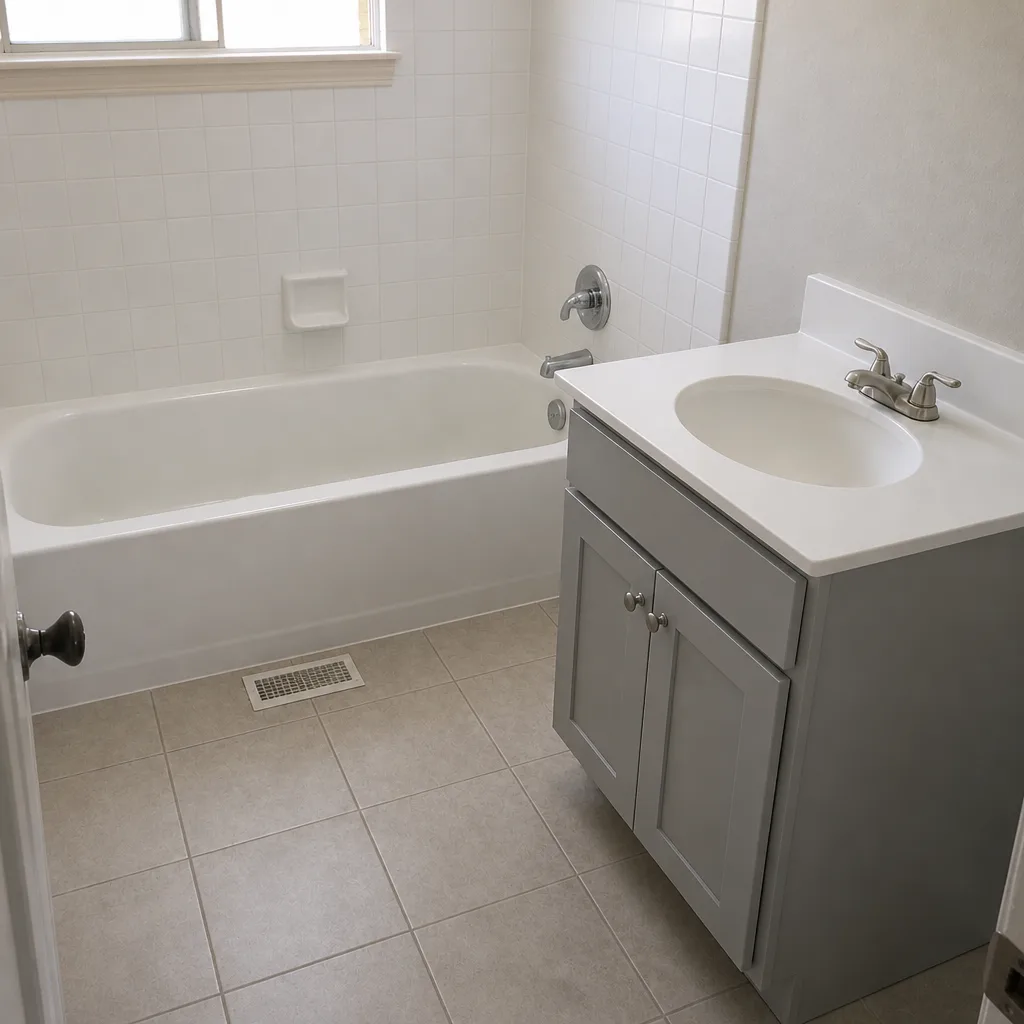
See the difference
 Before
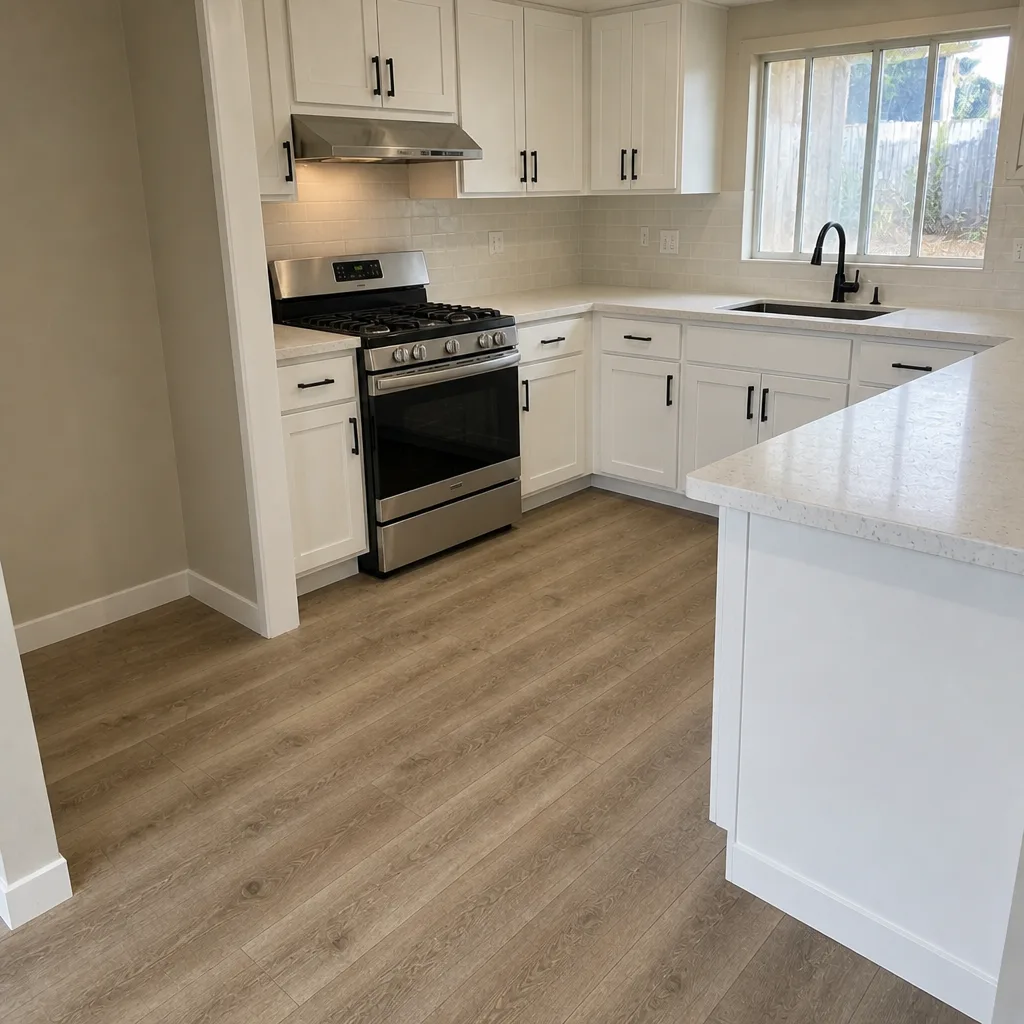 After
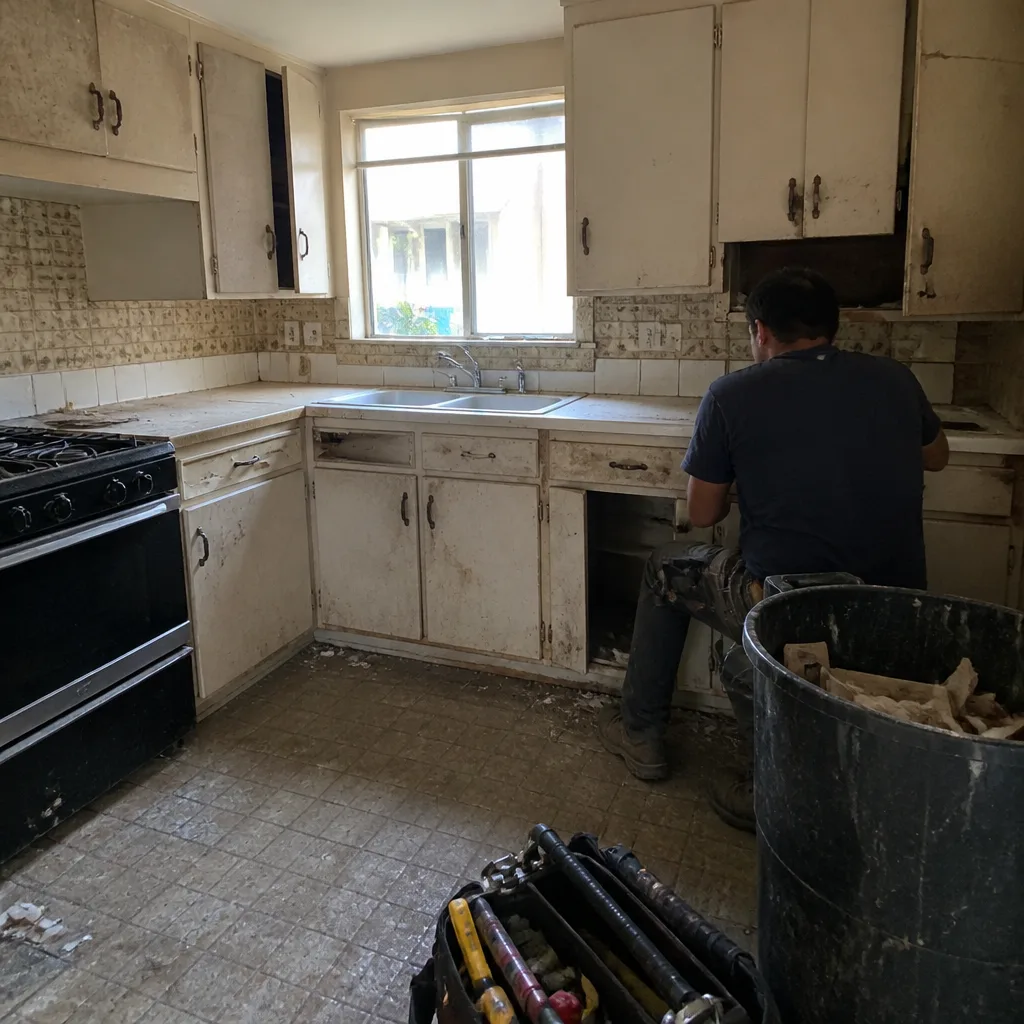 Before
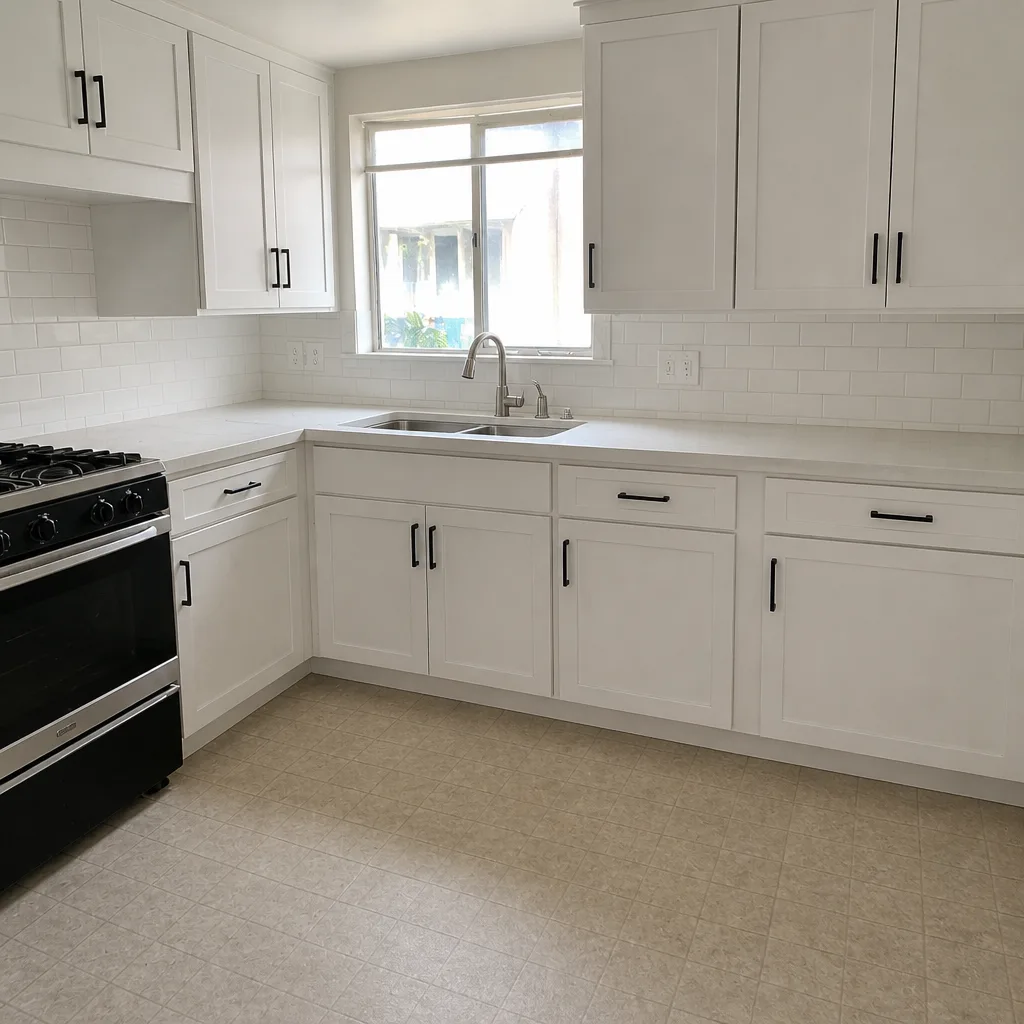 After
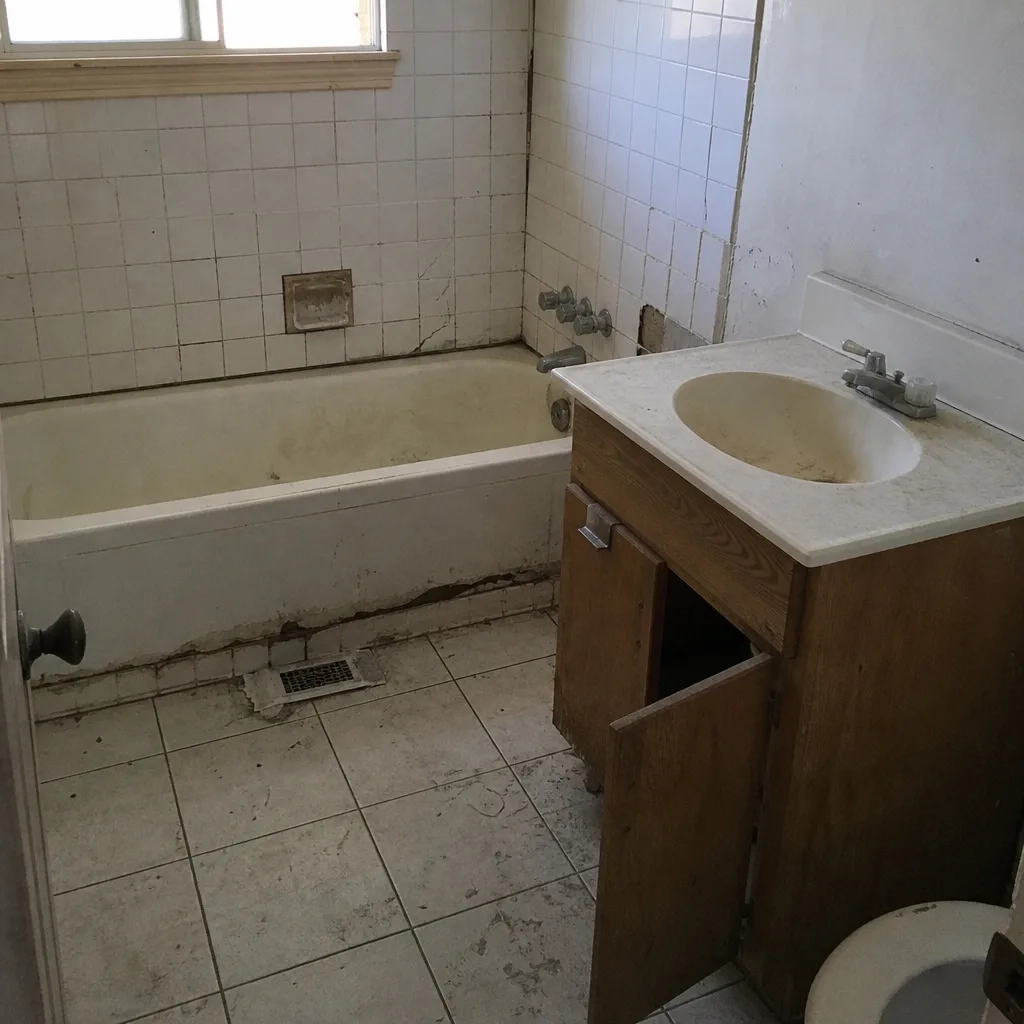 Before
 After
When to Call a Professional
Bring in a professional the moment the scope touches an electrical circuit, a water supply line, a gas appliance, or a structural wall. That covers a surprising amount of what feels like “just a small upgrade.” It also covers the whole project if your schedule won’t allow daily site management as an owner-GC. In our experience, three of four kitchens in Concord need at least one licensed trade, and half of those need to pull permits.
Bradford Remodeling Co Concord offers free estimates in Concord – call (866) 476-6447. The visit walks through what’s DIY and what’s licensed-trade, with a written scope before any work starts and a written price before the first tool comes out. Every completed project carries our 365-Day Done Right Promise, a full-year written guarantee: if the work fails within the guarantee period, we return and correct it at no charge.
Frequently Asked Questions
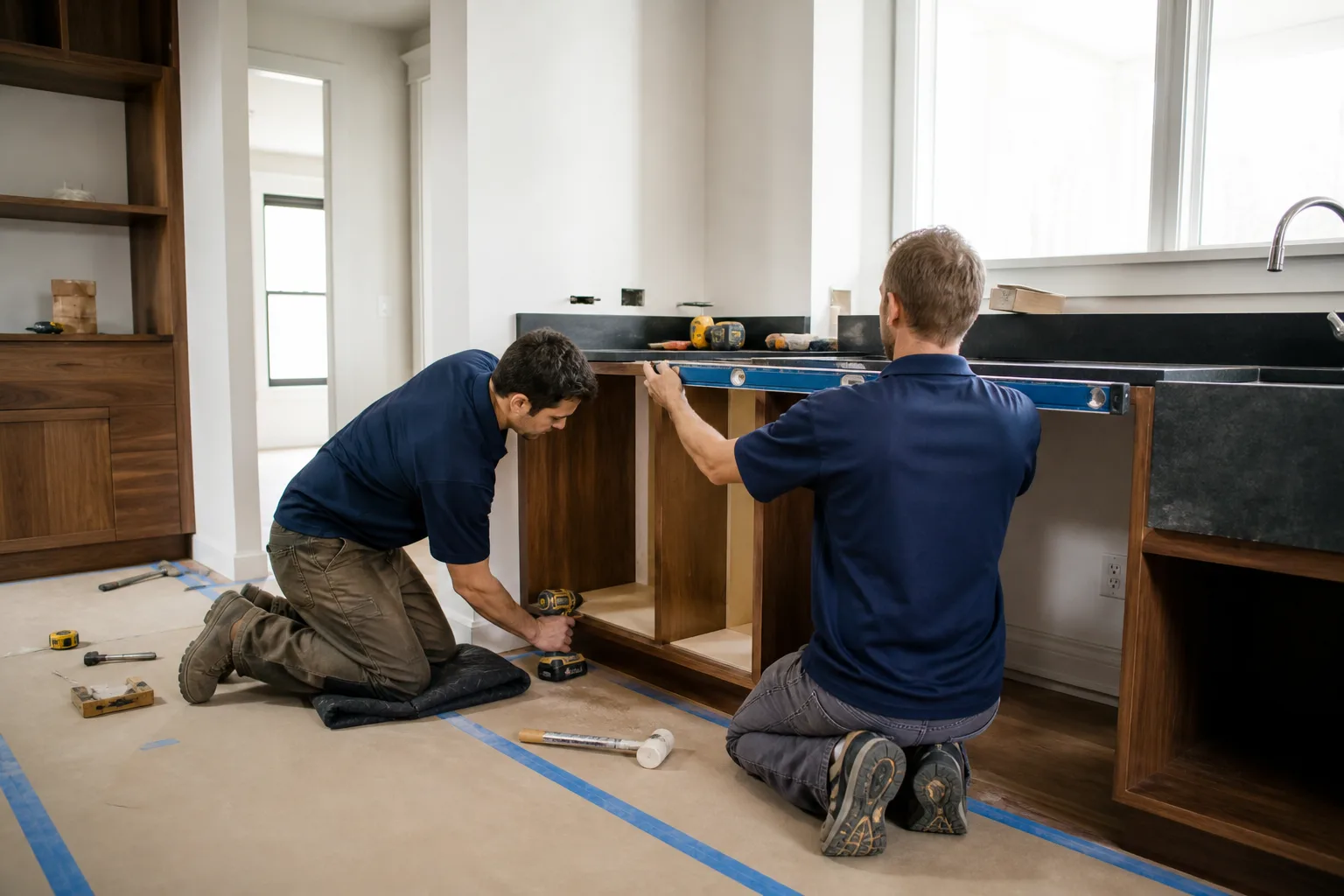
Yes. Painting cabinets, painting walls, tiling a backsplash over existing sound substrate, replacing hardware and faucets, and demolishing non-load-bearing elements are generally doable without a permit. Moving plumbing, adding electrical circuits, connecting gas, and touching structural walls require permits and a licensed professional. When in doubt, call the Concord building department or ask us during the free estimate.
Most full kitchens in Concord land between $55,000 and $110,000 depending on size, layout changes, and finishes. A cosmetic refresh (paint, hardware, backsplash, new appliances) runs $12,000 to $25,000. A mid-range remodel with new cabinets and countertops, no layout change, typically runs $45,000 to $70,000. Call (866) 476-6447 for a line-item written quote – the estimate is free.
Cabinet painting and backsplash tile. Cabinet painting saves roughly $2,000 to $4,000 versus replacement with similar quality, and a tile backsplash professionally installed runs $900 to $2,500 in labor for a typical kitchen. Both are skill-based, low-risk work with the right prep. Call (866) 476-6447 to talk through what fits your project.
It can. Most standard homeowner’s policies contain language excluding damage from work done without required permits or by unlicensed trades. Read your own policy, because the wording varies, and this isn’t legal advice. The pattern is real: if a water or fire loss traces to unpermitted work, the insurer may deny or limit the claim. Call us at (866) 476-6447 if you’re unsure whether a task needs a licensed pro.
Yes, if you have the schedule and discipline for it. In our experience, owner-GC projects save 15 to 25 percent of a full-service markup, but they cost four to eight weeks of near-daily management. If you can be on-site during work hours and hold trades to their scope, it’s viable. If your job is 9-to-5, the savings often get eaten by schedule delays. Call (866) 476-6447 for an owner-GC consult, which is free.
Yes. Every Bradford Remodeling Co Concord kitchen project that requires a permit has the permit pulled before work begins and every inspection passed and documented. We hand the homeowner the signed inspection cards at close. A free estimate at (866) 476-6447 will include a permit map for your specific scope. Every project carries the 365-Day Done Right Promise: a full-year written guarantee, and if the work fails in that window, we return and correct it at no charge.
What “Squared Away” Looks Like at Job Close
A finished kitchen at Bradford looks like this: the scope was agreed in writing before demo, the price was written down and never moved, the permits were pulled and every inspection passed, the site is clean enough to start cooking the same evening the last cabinet goes in, and the homeowner is holding a signed written guarantee for the full year after completion. That last part is The Garrison Standard in plain form. It applies to every project, every time, and it’s the piece most homeowners never get from a remodeler.
If your project touches any licensed trade, or if the whole kitchen needs a general contractor, call Bradford Remodeling Co Concord at (866) 476-6447 for a free estimate. We’ll map the DIY scope against the licensed scope in a single conversation, with the price range written down before we leave your driveway. You can also read about our Kitchen Remodeling in Concord process on the way in.
The Bottom Line
DIY and contractor work aren’t opposites in a kitchen remodel; they’re partners on a well-run job. The homeowner who paints cabinets, tiles a backsplash, and manages the cleanup saves real money. The homeowner who runs their own electrical, plumbing, or gas creates risk that the savings don’t cover. California’s permit rules and your homeowner’s policy both back that split. The kitchen is one of the few rooms in a house where the boundary matters this much, because four licensed trades converge inside it. Draw the line accurately, hire the licensed work out, and you’ll finish the project with a kitchen you can insure, sell, and enjoy. If you want help drawing the line, call us – the estimate and the scope map are free.
Written by the team at Bradford Remodeling Co Concord.